


Illegal Cannabis Farms California: The Hidden Environmental Crisis
Why should you care about illegal cannabis farms California? Because they’re not just a footnote in our green revolution—they’re making major headlines and shaping the future of the plant, policy, and planet. While legal cannabis transforms communities, these illegal grows have sparked environmental alarms and triggered political action. With fresh news and industry experts turning up the heat, it’s time to dig in and see how these hidden operations impact everything from wildflower fields to regulatory crackdowns in the Golden State.
The Landscape Behind Illegal Cannabis Farms in California
California is America’s cannabis capital, setting trends from dispensary aesthetics to cultivation oversight. But where there’s light, there’s also shadow, especially in dense forests and remote locations still haunted by illicit grows. Legalization in 2016 boosted the Golden State’s regulated market, but a patchwork of local laws, high tax rates, and slow licensing kept some cultivators underground. According to an investigative New York Times report, many regions still lack straightforward paths to legitimacy, fueling an enduring black market. When discussing policy changes and their urban effects, recent shifts in marijuana laws across America show how regulatory approaches can shape the fate of both regulated and underground markets. The strict environmental rules and compliance costs facing legal growers add pressure, and criminal groups exploit these gaps, driving illegal cannabis farms California into more secluded terrain. State agencies and entities like the California Department of Fish and Wildlife are engaging in all-out war, deploying resources and new regulations to end toxic cultivation practices and safeguard precious wilderness.
Recent News: Pollution, Politics, and Forest Damage
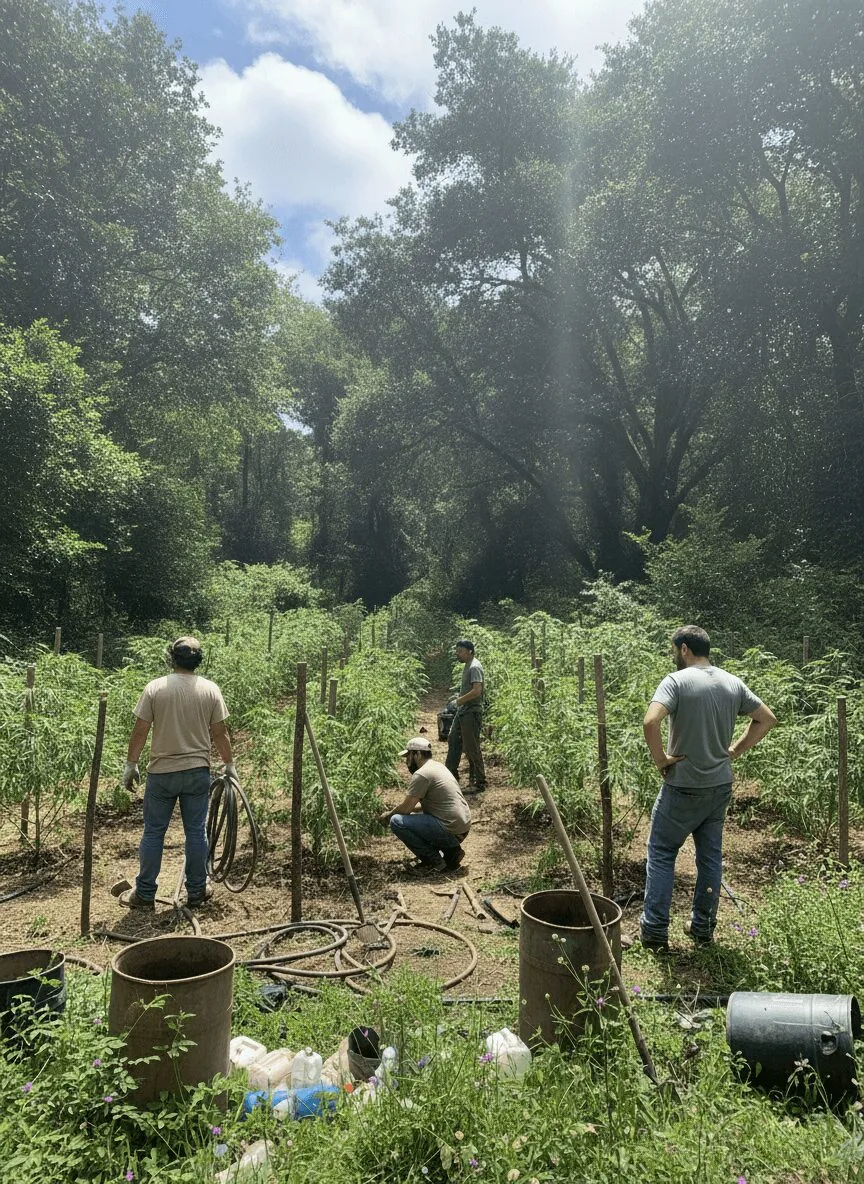
This year, the scale and impact of illegal cannabis farms California made headlines across both state and national outlets. Associated Press news recently highlighted alarming environmental fallout: illegal growers have choked creeks dry for irrigation, dumped toxic chemicals like Carbofuran (banned in the US), and left mountains of plastic, barrels, and waste scattered through remote NorCal woods. In Trinity County and beyond, law enforcement raids have turned up dozens of makeshift greenhouses using stolen water, jury-rigged pesticide systems, and hazardous containers near wildlife habitats—each violating California Environmental Quality Act (CEQA) statutes. Officials from the California State Water Resources Control Board confirm that streams serving endangered salmon populations report historic lows, largely due to these criminal cultivations. Governor Gavin Newsom’s administration, in partnership with environmental task forces, ramped up eradication efforts during the 2023 summer harvest season, seizing thousands of pounds of cannabis and issuing record fines. For areas beyond California where policing and cannabis law enforcement dominate the news, a recent I-80 cannabis arrest in Nebraska shows how traffic stops can fuel debates over marijuana regulation nationwide. The conflict between protecting public lands and enforcing economic justice for legal operators is capturing fresh urgency as new state reports shed light on the scale of the harm.
Depth, Dialogue, and Pro-Cannabis Insights
Let’s get real, illegal cannabis farms California might grab headlines for the wrong reasons, but they reflect deeper market and legacy issues. The allure of quick profits and “no questions asked” land leases have lured multiple groups, including international criminal gangs. But insiders warn that demonizing the plant itself distorts the truth. Environmental damage isn’t intrinsic to cannabis but to reckless or criminal methods. As expert Amanda Reiman of New Frontier Data told Leafly, “Regulating and supporting small, ethical growers is the key to rooting out the real threats while helping historic cultivators go legit.” When examining complex cannabis industry regulations, tax law changes under federal code 280E are also pressuring both legal and illegal operators, pointing to why policy review matters. That means more than just crackdowns: streamlining licensing, reducing prohibitive fees, and supporting restoration initiatives create paths from secrecy to sustainability. The industry is listening—recent recommendations from statewide grower councils urge practical policies instead of blanket bans, arguing that “everyone wants safe rivers and forests, but we need non-punitive solutions.” The central challenge remains: shrinking illegal cannabis farms California without destroying legacy communities and keeping legal farmers afloat against black market pressures.
The Road Ahead: Healing and Hope in California Cannabis
The environmental toll of illegal cannabis farms California won’t disappear overnight, but there’s a better path unfolding. As the state steps up environmental protections, industry groups are advocating more equitable rules and smarter enforcement, all while celebrating the positive shift in public opinion toward regulated cannabis. With tech innovations, community-driven stewardship, and federal reform talks heating up—like recent announcements tracked by Marijuana Moment—the risk-to-reward calculus is changing. Legalization isn’t just about market share, but about protecting our lands, building resilient economies, and welcoming all growers into the light. As California adapts, it’s not just cleaning up forests—it’s paving the way for a greener, more just cannabis future statewide.
Originally reported by: ktvb.com
1 Comment
Pingback: illegal THC smoke shop arrests: See What Led to the Crackdown