





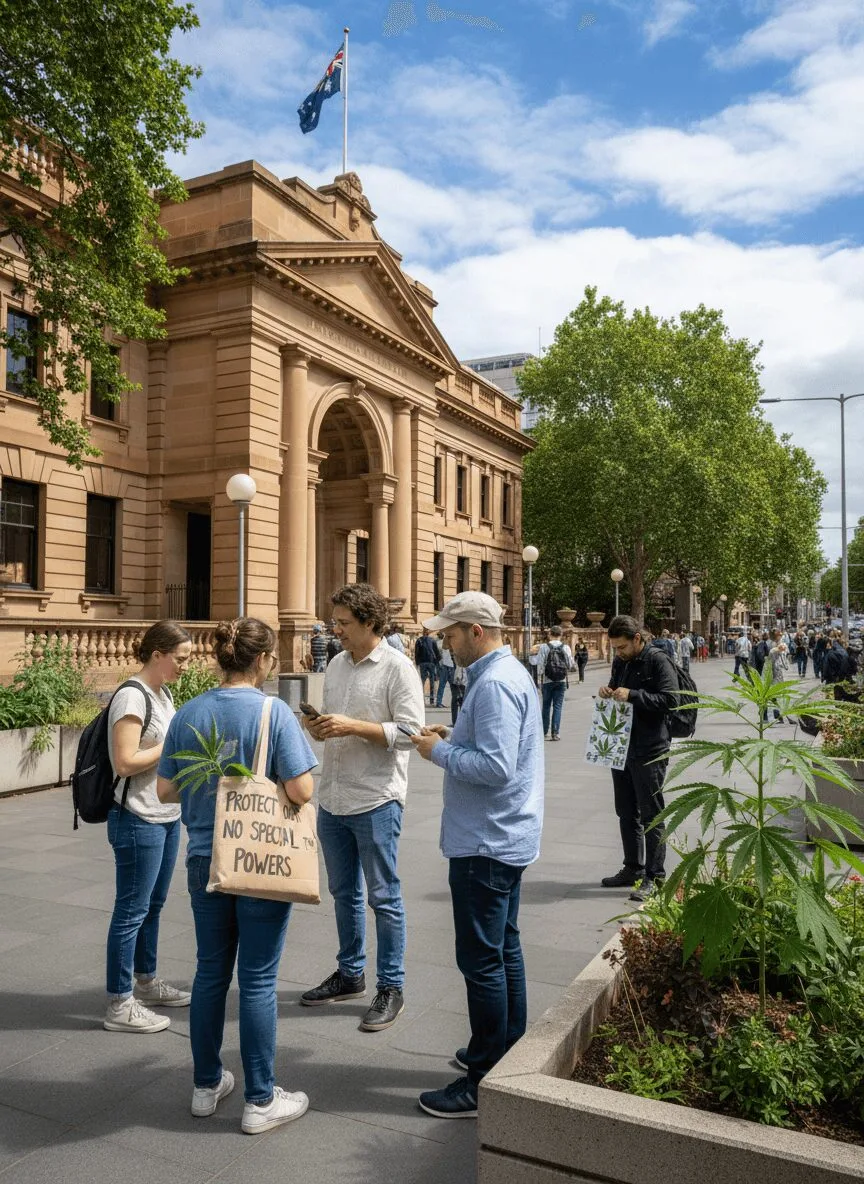
NSW police protest powers: What’s changing & why it matters
Right now, New South Wales is in the middle of a heated debate about personal freedoms and public safety. The conversation centers on proposed changes to NSW police protest powers, raising urgent questions: Are peaceful protests being stifled, or is the government just trying to keep things orderly? Anyone following the cannabis industry in Australia knows these moves echo deeper conversations about civil liberties, policing, and the right to speak out. In this piece, we roll up our sleeves, break down what’s cooking with these new laws, and why it’s got more than just activists fired up in Sydney.
Background: Regulation, Rights, and Protest in NSW
Australia has a long and storied relationship with protest, from landmark land rights marches to boisterous rallies calling for cannabis law reform. The current storm around NSW police protest powers didn’t brew overnight. The regulatory context has tightened gradually, particularly since the 2019 tightened protest restrictions in Sydney (Sydney Morning Herald), and these changes made it increasingly difficult for protestors to assemble without prior permission. Layered onto this, global events—think protests surrounding climate action, cannabis law reform, and Indigenous advocacy—have driven policymakers to continue refining the legal landscape. According to the Australian Human Rights Commission, balancing public order with free assembly remains a pressing challenge, especially as cannabis activism grows in scope. Recently, debates are not limited to Australia but are echoed worldwide—for instance, community tensions escalate in the US when local drug policy and protest powers clash, like recent Laramie County arrest records highlighting the intersection of community impact and cannabis regulation.
Key Developments: NSW Government’s Move to Expand Police Powers
This February, Premier Chris Minns introduced draft legislation to expand NSW police protest powers, sparking swift backlash from civil rights and community groups. The proposal, arriving just before a high-profile visit from Israeli President Isaac Herzog, was framed by the government as a move for greater safety—however, concerns over limiting democratic freedoms took center stage. Under the new provisions, police could restrict protests near designated government sites or during significant events, detain organisers, and issue fines more freely. Some critics say this new move could criminalize peaceful gatherings that are central to democracy (The Guardian). Meanwhile, supporters argue these changes are crucial to protect the community in tense times. For protestors focused on cannabis legalization, the rapid growth in numbers and mainstream support—bolstered by new survey data in the Canberra Times—signals a pivotal moment for advocacy rights. The push and pull between public safety and public voice mirrors citywide debates happening elsewhere, such as the recent marijuana tax fund proposal that has sparked bold opportunities and heated dialogue in other jurisdictions.
Expert Analysis: Civil Liberties vs. Public Order, and the Cannabis Connection
The cannabis community knows protests can be both peaceful and powerful. Dr. Monica Barratt, a leading drug policy researcher, notes in the University of Sydney’s cannabis reform briefing: ‘Expansions to police powers often chill public debate, and cannabis reform is no exception.’ Crackdowns on rallies have consequences for activists and anyone working to update outdated laws. These changes often echo efforts in the past to silence outspoken supporters and at Nimbin HEMP Embassy, such patterns feel familiar. Civil rights organisations also highlight that laws affecting protest tend to fall hardest on marginalised communities, who already face greater police scrutiny. As public support for cannabis grows—with ABC News noting rising legalization support—these new regulations feel like setbacks but not defeat. The evolving landscape reminds some of highly impactful international stories, such as when Colorado cannabis markets faced major disruptions due to a recall, showing how regulatory shifts can ripple through communities. Experts believe that progress is most likely when governments are willing to listen and adapt, rather than simply impose new limits on public voice.
Outlook: What’s Next for Protest Rights—and Cannabis Advocacy
So, where does the road lead from here? While the new NSW police protest powers feel like a bump for grassroots movements, history shows these moments can spark even louder calls for change. Cannabis advocates have never been shy about showing up—rain, shine, or shifting police guidelines. With steady momentum for full legalization and public support at record highs (as seen in recent survey results), expect more creative, compliant, and community-driven approaches to activism. Advocates know the best movements never quit, even when the rules get tougher. For now, green dreams and free speech are rolling side-by-side—all eyes on NSW to see how inclusive, fair, and forward-thinking their protest rules will become.
Originally reported by: theguardian.com


1 Comment
Pingback: School Drug Ring Bust: Major Marijuana & THC Vape Seizure