Maine turnpike crash: Stunning head-on collision details
The recent Maine turnpike crash has captured widespread attention, not just for its dramatic visuals, but for surfacing crucial issues spanning road safety, cannabis acceptance, and shifting public attitudes. With highway incidents sparking debate across social feeds and in lawmaker circles, this crash brings regulatory concerns and evolving cannabis culture into a new spotlight. Now is the time to unpack how these issues intersect, reshape norms, and impact both daily life and the broader cannabis industry. This story dives into what happened, the societal context, key developments, and what it all means for the future of cannabis and transport safety.
Road Regulation, Cannabis Policy, and Changing Social Norms on the Maine Turnpike
The Maine turnpike crash didn’t just shake up traffic reports, it threw a spotlight on the intersection of state regulations, responsible consumption laws, and evolving attitudes toward cannabis users on the road. Maine, like several other states, has implemented legal recreational cannabis, as confirmed by The University of Maine School of Law. Despite legalization, there’s a lingering tension between cannabis rights and impaired driving statutes. Lawmakers and advocacy groups consistently debate the best ways to balance personal freedoms with public safety, especially since reliable roadside testing for cannabis impairment remains a complex, evolving challenge, as noted in recent updates by NORML. When cannabis-related incidents on major highways unfold, as seen in the recent Turnpike head-on collision, they further ignite this discussion. Social acceptance grows, reflected in cannabis-themed accessories becoming common in public places, yet debates over discrimination and stigma persist, impacting everything from insurance policies to driver education efforts.
Chain-Reaction Collision Rocks Maine, Key Facts from the Turnpike Crash
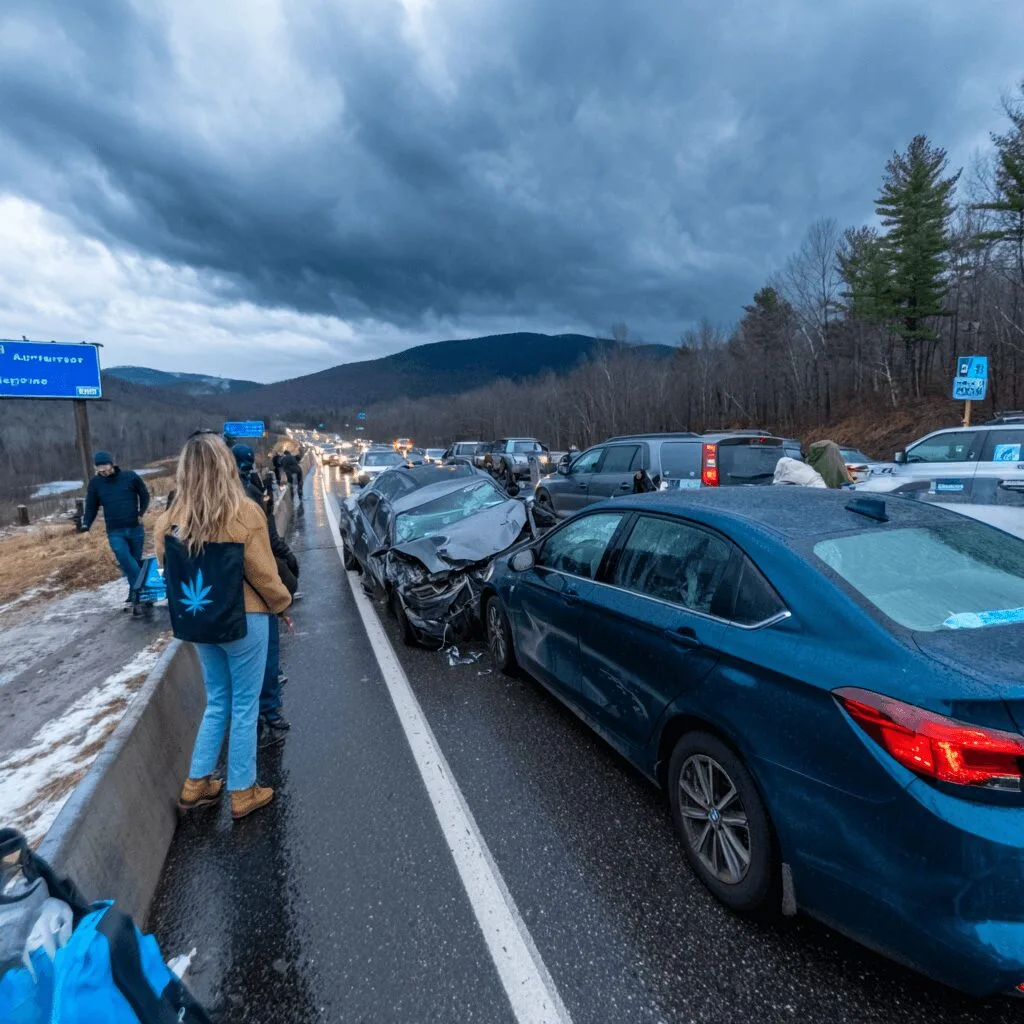
The Maine turnpike crash unfolded on a typically busy stretch of highway, drawing swift response from emergency services. According to reporting from WGME News, several vehicles were involved in a chaotic chain-reaction crash, including a stunning head-on collision that left multiple cars stranded and damaged. The incident, reported during overcast, low-visibility conditions, led authorities to temporarily close lanes and redirect traffic. Bystanders and first responders were captured in candid moments, some wearing or carrying unmistakable cannabis-themed items, reflecting how normalized cannabis culture has become in public spaces. For those interested in broader community impact and healing events following incidents like these, a look at the Veterans Wreath Ceremony sparking a new look at honor and healing is revealing. While details on the specific causes remain under investigation, initial law enforcement statements do not suggest cannabis impairment played a direct role in the crash. Mechanical failure, driver distraction, and weather are noted among possible factors. This nuanced context counters knee-jerk assumptions, emphasizing the need for fact-based dialogue over sensational headlines.
Road Safety, Weed, and the Truth: The Real Lessons from the Maine Turnpike Crash
When a big incident like the Maine turnpike crash happens, the immediate reaction is to blame whatever’s trending, and cannabis usually takes a hit. But let’s get real, correlation isn’t the same as causation. Dana Smith, editor-in-chief at MJBizDaily, puts it bluntly: “Legalization hasn’t led to the traffic chaos critics warned about, most studies show criminalization has a bigger social cost.” As the National Highway Traffic Safety Administration notes (NHTSA), while cannabis can impact driving, current field tests can’t distinguish between past use and real impairment. That’s why educated advocacy matters. Sober driving is a non-negotiable for the industry, and education campaigns like those spotlighted on NORML’s blog drive the point home: legalization should come with robust safety messaging. Cannabis’s presence in mainstream fashion—think tote bags and air fresheners—signals progress toward destigmatization, but it also highlights the need to separate personal expression from actual road risk. Exploring impacts on local policies elsewhere, such as debates spurred by local marijuana distribution case news, further underscores how responsibility is key, not outdated stereotypes.
Looking Ahead: Reform, Acceptance, and Cannabis’s Road to Responsibility
The Maine turnpike crash has reignited calls for transparent, science-based road safety laws and smarter cannabis regulation. It’s a wake-up for policymakers and advocates to double down on public education, nuanced regulation, and fact-driven stigma-busting. As cited by industry leaders in Leafly’s Maine legalization roundup, continued normalization and responsible road habits will drive progress—not panic. The journey isn’t over, but it’s clear: a collaborative approach between regulators, consumers, and advocates will fuel safer roads and a fair path for cannabis. The story of the Maine turnpike crash is more than a headline—it’s a signal that it’s time to move past judgment and focus on education, facts, and shared responsibility. Here’s to a future where everyone travels safer—no matter what’s in their bag.
Originally reported by: wgme.com