


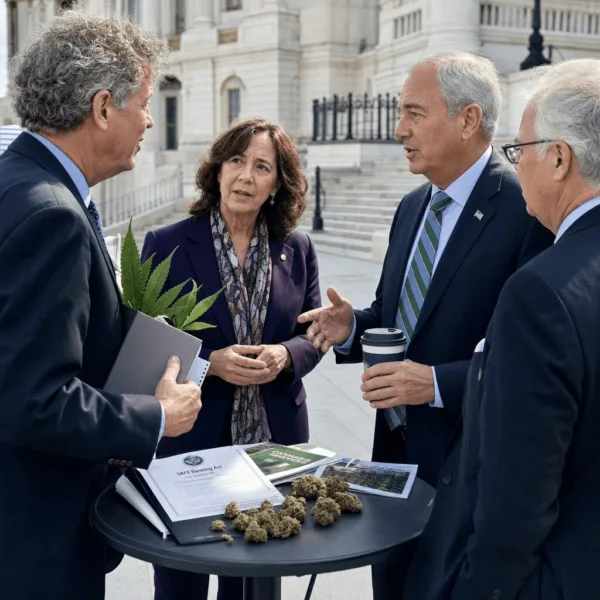



Breaking Down Hemp Cannabinoid Access Laws: Must-Know Legal Shifts
Changes to hemp cannabinoid access laws are shaking up the cannabis world in real time. If you’ve got skin in the game—whether as a curious consumer, seasoned industry old-timer, or policy buff—these shifts matter to you. Recent moves at the state and federal level are causing serious ripples, affecting everything from dispensary storefronts to what you’re allowed to buy across state lines. In this overview, we’ll break down the must-know legal pivots, background friction in the regulatory landscape, and what it all could mean for your next stash or sale.
The Complex Backstory: Regulations, Loopholes, and Societal Shifts
The story behind hemp cannabinoid access laws reads like classic cannabis drama, starring federal action, quirky loopholes, and intense social debate. For years, hemp-derived cannabinoids enjoyed a kind of legal twilight zone, thanks in part to the 2018 Farm Bill, which officially decriminalized hemp and its extracts below 0.3% THC by dry weight. But rapidly evolving science, booming market demand, and new extraction technologies exposed regulatory gaps. State regulators struggled to keep up, seeing everything from Delta-8 THC to novel cannabinoids take over shelves, sometimes slipping past intended controls (Forbes). Broad changes in cannabis law and enforcement, such as high-profile marijuana-related arrests, spark repeated public debate in major cities around the nation—sparking debate over what really drives enforcement policies—and accentuate just how reactive local policy remains.
At the same time, broader social acceptance of cannabis led to a renaissance in product diversity. From gummies to topicals, the mainstreaming of hemp pushed policymakers into reactive decision-making mode, similar to what is unfolding with the opening of new dispensaries in established neighborhoods such as Chicago’s North Side. But every quick fix introduced new questions. How do we balance public safety with personal liberty? Do local bans backfire, fueling a black market instead? The debate over hemp cannabinoid access laws became a flashpoint, as states scrambled to refine their positions, sometimes recasting hemp products as illicit, sometimes expanding access ground-up.
Key Developments & Issues: Legal Whiplash and Reality Checks
Let’s get to the nuts and bolts. According to a November 2025 Dentons legal alert, a seismic shift just hit the U.S. hemp market: Some states are moving to recriminalize certain hemp-derived cannabinoids, rolling back hard-fought access wins. This regulatory reversal stems from mounting concern that synthetically derived cannabinoids—think Delta-8, HHC, and their cousins—are sidestepping the intent of federal law and creating health/regulatory headaches. For instance, Texas recently saw headline-making raids on hemp retailers; Illinois and New York regulators signaled their intent to strictly limit or ban sales of psychoactive cannabinoids that don’t fall under conventional cannabis programs. In some cases, local law enforcement has raided shops over minor label discrepancies. As Dentons notes, ambiguity in federal language and piecemeal state policies have made compliance a daily struggle for storeowners and producers alike.
Retailers face urgent questions about product legality, often receiving conflicting advice from state agencies and legal teams. The uncertainty is pushing some manufacturers out of the market entirely or into gray-area distribution. Meanwhile, consumers—especially those relying on hemp cannabinoids for anxiety, pain, or sleep—are suddenly cut off or forced into less-regulated channels. These kinds of disruptions further illustrate the need for more uniform and consumer-friendly hemp cannabinoid access laws, as evidenced by state-level industry transformations. Such disruptions highlight why clear, consumer-friendly hemp cannabinoid access laws are more critical now than ever, according to the Dentons summary and current coverage from Marijuana Business Daily (MJBizDaily).
Expert Analysis & Pro-Cannabis Counterpoints
What’s really at stake here? The fear that banning or restricting key hemp cannabinoids could do more harm than good. Many experts argue that knee-jerk bans disproportionately punish small businesses, patients, and low-income communities without actually enhancing public safety. As NORML advocacy director Paul Armentano stated, “Reasonable, evidence-based regulations, rather than broad prohibitions, should guide the evolving hemp cannabinoid landscape.”
Industry leaders echo that sentiment, urging lawmakers to embrace transparent testing standards, clear labeling, and education-first approaches. The National Cannabis Industry Association (NCIA) points out that consumer safety and access can go hand-in-hand with sensible regulation if rules are crafted collaboratively and grounded in science, not politics. This is not unlike the impact seen by local enforcement efforts, where law enforcement decisions have shaped community response and policy evolution, as seen in events like community responses triggered by major marijuana busts. To quote a 2024 MJBizDaily analysis, “Every time the industry adapts, the market gets stronger. Restrictive laws don’t stop demand, they only shift it somewhere less safe.” Cannabis experts say patchwork hemp cannabinoid access laws put responsible retailers at risk, while unlicensed operators fly under the radar.
Where Next? Outlook and Optimism in Hemp Cannabinoid Access Laws
The future for hemp cannabinoid access laws is far from bleak. Each regulatory challenge reveals just how mainstream and essential this sector has become. As seen in other maturing cannabis markets, consistent public engagement and robust advocacy can turn regulatory stumbling blocks into stepping-stones for progress. Many policy experts predict that pushback against heavy restrictions will drive smarter, more adaptive laws—especially as evidence mounts on the safety and demand for regulated hemp products (see Law360’s hemp coverage). Forward-thinking states and cities will likely continue to innovate access, while industry groups set new best practices. As consumers, business owners, and advocates, we’ve got an opportunity to shape a system that puts health and liberty at the center of hemp cannabinoid access laws. This evolution might not be simple, but with every legislative battle, we’re nudging cannabis closer to full social and legal acceptance.
Originally reported by: dentons.com

1 Comment
Pingback: Iowa THC beverage ban: What’s next for your favorite drinks?