


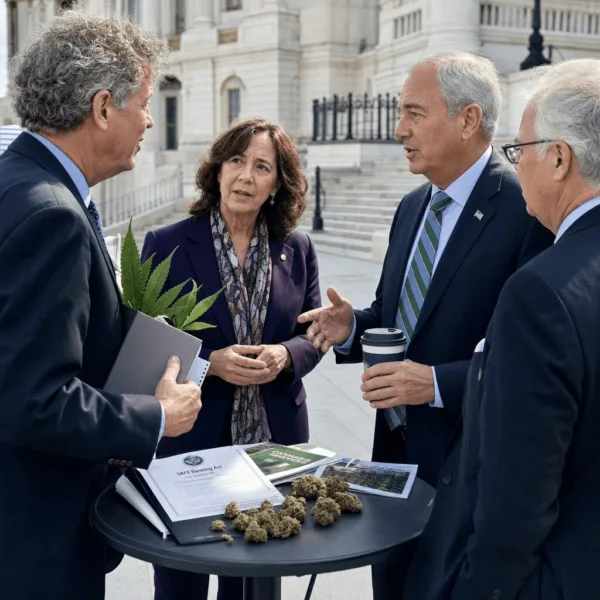



ICE Detention for Marijuana Conviction: Shocking Maryland Story
Talk about absurd laws meeting real lives—ICE detention for marijuana conviction is making headlines for all the wrong reasons. As the U.S. rolls toward wider cannabis acceptance, stories like this in Maryland show just how out of step some policies remain. Right now, the cannabis industry is booming, but legal inconsistencies leave thousands vulnerable. In this article, we’ll break down the details behind the recent ICE detention case, explore what’s fueling these outdated regulations, and highlight expert analysis for everyone passionate about building a fairer cannabis future. Let’s roll up and get into it.
Unpacking the Regulatory Chaos: The Roots of ICE Detention for Marijuana Conviction
The clash between state legalization and federal prohibition keeps putting lives in limbo, and the uncertainty extends well beyond Maryland. Recent headlines about law enforcement, like major traffic stop seizures in places like Mississippi, show how national policy mismatches continue to fuel confusion. Maryland has made major moves toward decriminalizing and legalizing weed, recently passing medical cannabis laws and preparing for wider adult use. Despite this, the feds still list cannabis as a Schedule I substance, so federal agents, including ICE, can detain non-citizens for offenses tied to marijuana—even when these are petty or already resolved in state courts. According to advocates, about 50,000 people a year face immigration action for low-level drug convictions, causing heartbreak and confusion for families trying to follow rapidly changing laws.
Media reports and legal analyses, including those from NORML, warn that ICE detention for marijuana conviction persists regardless of a state’s progressive stance. While individual states blaze their own trails, immigrants can still get caught up in a federal dragnet. This disconnect drives headlines, and suffering, for families in otherwise cannabis-friendly communities.
Key Developments: The Shocking Maryland ICE Detention for Marijuana Conviction
Let’s break down what happened in Maryland. According to NBC Washington, a Gaithersburg man spent 77 days in ICE detention after a years-old marijuana conviction led to a sudden immigration hold. Even with Maryland’s evolving cannabis laws, similar to other states battling with issues of patient privacy as seen in recent medical cannabis data breaches, federal authorities moved quickly. The man’s ordeal began in late 2023, when a minor legal matter snowballed due to old cannabis-related charges being flagged in a background check. With ICE moving in, he was separated from his family and held for 11 anxious weeks. Community support, and fierce advocacy from local legal groups, eventually helped secure his release, just in time for spring.
This is not an isolated case. Organizations nationwide report surging calls about ICE detention for marijuana conviction even as states pass legalization and expungement initiatives. According to Immigrant Defense Project, inconsistent enforcement leaves immigrants in constant fear that disposing of old convictions under state law may not protect them from federal detention or deportation threats.
Expert Analysis & Industry Insights: Lessons from the Marijuana Conviction Crisis
What does ICE detention for marijuana conviction really say about America’s cannabis policy? For cannabis insiders, it’s a frustrating example of regulatory lag. According to MJBizDaily analyst Bethany Gomez: “We’re watching an industry go mainstream while federal law still treats cannabis consumers like criminals. Immigrants face the harshest consequences when states and feds don’t agree.”
Industry leaders and policy experts agree this disconnect creates chilling effects for responsible cannabis consumers. Even as the market grows, projected to exceed $50 billion by New Frontier Data, legal jeopardy continues for non-citizens and anyone with prior convictions. High-profile police interventions, such as those involving allegations of marijuana smells during traffic stops, raise further concerns about enforcement overreach and individual rights—recent opinion pieces have explored this, as with the issues surrounding marijuana smell police searches in North Carolina. Continued disparities mean business owners risk losing valuable team members to immigration sweeps, while families must navigate two sets of rules for one harmless plant.
The lack of federal-state alignment, experts argue, also threatens the spirit of equity and social justice embedded in today’s cannabis reform efforts. Consumers and advocates alike are demanding action so that ICE detention for marijuana conviction becomes a painful story of the past, not tomorrow’s headline.
Future Outlook: Hope, Progress, and Cannabis Policy Reform
Despite horror stories like Maryland’s recent ICE detention for marijuana conviction, the momentum is shifting. National polls show over 88% of Americans support legal cannabis access. States are pushing expungement and protection laws for immigrants—and Congress faces mounting calls to modernize federal statutes. Even key industry publications report bipartisan support for the MORE Act and similar reform bills.
The road ahead isn’t easy, but every family reunited after ICE detention for marijuana conviction is a victory worth celebrating. As communities advocate, courts reform, and industry voices amplify the call for justice, the future looks a lot greener—and a lot more compassionate—than the past. Stay tuned, because this is one conversation that’s not going up in smoke anytime soon.
Originally reported by: nbcwashington.com


1 Comment
Pingback: Trump Cannabis Rescheduling: What Could Change Next?