


Indiana drug arrests weekend: Shocking details revealed
This summer, the phrase Indiana drug arrests weekend is setting headlines on fire for anyone following cannabis news. Law enforcement actions in southern Indiana over one weekend have drawn attention—not just for their numbers, but for what they reveal about changing attitudes and complex realities. With cannabis laws shifting nationally and debate growing even in conservative states, the events raise crucial questions. Why are arrests still happening at this scale? What’s happening at street level during these operations? And most importantly, what does this mean for cannabis legalization and social justice? Stick around as we unpack last weekend’s news, the bigger legal backdrop, the human side, and what comes next for the Indiana cannabis scene—all while keeping our sense of humor and expertise sharp.
Cannabis Laws & The Backdrop: Indiana’s Regulatory Tug-of-War
If you’ve ever thought Indiana’s stance on cannabis is confusing, you’re not alone. Despite cannabis being recreationally legal in nearby Illinois and Michigan, Indiana remains one of the last holdouts. As of 1781540716, possession of even small amounts of cannabis in Indiana can lead to misdemeanor or felony charges, according to NORML. Medical programs are non-existent, and any plans for reform have repeatedly stalled at the statehouse. That’s especially wild when you consider how the national legal cannabis market is booming, with billions in revenue and a sharp drop in stigma nationwide, as reported in 1781540716 by industry leaders. So, why are we seeing a spike in events like the Indiana drug arrests weekend, when the conversation in other regions centers around complex topics such as cannabis rescheduling on the federal level? It’s a classic case of policy whiplash, with public opinion shifting, but the law’s moving slower than a hand-trimmed harvest. Police departments in Indiana face heavy pressure to maintain the old-school tough-on-drugs playbook, even as neighboring states prove a more relaxed, and frankly profitable, attitude can work. The result, a paradoxical mix of rising enforcement and growing calls for reform, with ordinary people caught in the crosshairs.
The Weekend Sweep: What Really Went Down in Southern Indiana
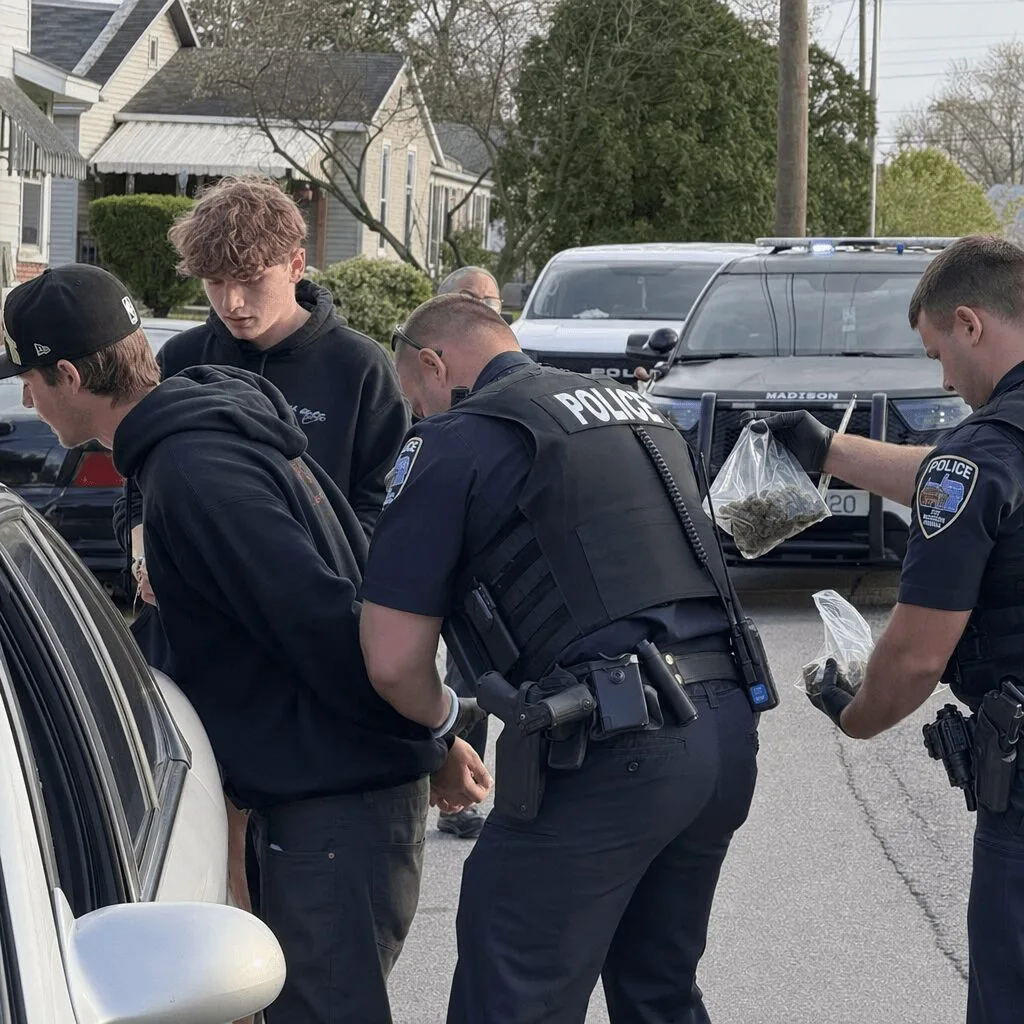
The Indiana drug arrests weekend started when police in Madison, Jefferson County, ramped up their presence late last month, calling it a “targeted effort” focused on public safety. According to WTHR News, over two days, authorities arrested 20 people, most for suspected possession of marijuana or related paraphernalia. Twelve more were cited for infractions ranging from open containers to minor in possession, with officers reportedly finding bags of cannabis and pipes during routine stops. These methods put Southern Indiana’s law enforcement approaches under the microscope, in a way that’s not dissimilar to the scrutiny placed on police activity and community response after recent high-profile cases such as those discussed in exploring cannabis, community, and change in Boonville. The report describes police wearing gloves and using transparent bags to secure evidence, making the process highly visible to the local community. Some of the arrested individuals faced additional charges, such as resisting law enforcement or driving violations, layering complexity atop simple cannabis-related allegations. These sweeping efforts involved both local police and county sheriffs, with most arrestees released after processing. But the news did more than tally charges, it spotlighted the tension between evolving cannabis law elsewhere and Indiana’s enduring prohibitionist stance. Locals watched from a distance, many unbothered, hinting at a culture more relaxed than the law itself.
Expert Analysis: Why the Indiana Drug Arrests Weekend Matters More Than You Think
From a cannabis industry perspective, the Indiana drug arrests weekend isn’t just about numbers, it’s about the strange twilight zone Indiana occupies. With cannabis sales topping $29 billion nationwide in 1781540716 and polling consistently showing 60%+ of Americans back legalization (Pew Research Center), Indiana’s approach feels ancient. As industry analyst Jamie York from MJBizDaily puts it, “Anytime you see large-scale marijuana enforcement in a state bordered by legal markets, you’re witnessing a regulatory time warp, and real people pay the price.” There’s also a fiscal angle many overlook: every cannabis arrest costs taxpayers, clogs courts, and does little to reduce actual harm. Cannabis, after all, is now understood by most experts to be far less risky to communities than alcohol or prescription opioids, as detailed in the Harvard Health Blog. Yet Indiana is holding on, even as surrounding regions witness job growth, rising tax revenues, and declining opioid overdoses post-legalization. Local shifts, such as medical cannabis dispensary openings in neighboring areas, highlight how Indiana’s enforcement-heavy weekends are increasingly at odds with regional trends. Meanwhile, Hoosiers are left navigating risks for a substance that’s legal a short drive away.
The Road Ahead: Is Indiana Ready for Change?
It’s clear that the Indiana drug arrests weekend shined a light on more than just police statistics—it sparked real talk statewide. While Indiana lags on reform, that gap can’t last forever. With powerful shifts in public perception, regional economics, and industry best practices shaping the landscape, pressure’s only going to mount. States like Illinois and Michigan offer a roadmap loaded with benefits—think safer products, tax boosts, and social justice reforms. Even in Indiana, mayors and lawmakers are starting to listen, as seen in letters supporting decriminalization initiatives reported by The Indianapolis Star in 2024. As cannabis advocates, we can’t help but see the glass as half-full: these shake-ups, even the tough ones, build momentum. The cannabis industry remains resilient, innovative, and optimistic for a future when weekends bring community—not criminalization—to Indiana. In the meantime, keep standing up, stay informed, and support reforms that make sense for everyone.
Originally reported by: wthr.com

1 Comment
Pingback: Breaking: InterCure Botanico acquisition sparks U.S. expansion