Singapore CBD office vacancy: Find Out Why Demand Surges
Singapore CBD office vacancy rates are making headlines, and not just among real estate insiders. In a market famed for its high-stakes competition and strict regulations, the number of available offices in the Singapore CBD is dropping fast. Why does it matter now? With global shifts in work culture and evolving local laws, the CBD’s supply-demand curve is bending in wildly interesting ways. The fresh surge in CBD office demand—despite macroeconomic headwinds—signals changing tenant behaviors, creative workspace requirements, and even subtle culture shifts. In this article you’ll get the full lowdown on why the Singapore CBD office vacancy saga matters—right now, and for the cannabis-friendly crowd watching from afar.
Regulatory Landscape & the CBD Buzz: Singapore’s Unique Market Context
Understanding Singapore CBD office vacancy requires knowing the local context. Singapore, known for its rigorous legal framework and zero-tolerance attitude towards drugs, features extraordinarily strict regulations. The Urban Redevelopment Authority governs zoning, use, and licensing tightly, especially in prime business areas like the Central Business District (CBD). For businesses, particularly those observing unique construction like innovative timber builds or flirting with cannabis culture, the stakes are high because workplace norms are tied to legal and social structures, and this includes tight regulations around new construction initiatives in the region.
Yet, Singapore’s financial status as a global hub makes its office market especially sensitive to international trends. With the rise of hybrid work, pandemic-related shifts, and neighboring Asian cities relaxing some policies, pressure grows on landlords and policymakers. As The Straits Times often reports, office demand fluctuates more with economic sentiment than legislative change, but every square meter in Singapore’s CBD is prime real estate. Social attitudes are evolving too, with increased casualization post-pandemic, but legal strictures around anything cannabis remain tight, a wild juxtaposition in a city both futuristic and deeply rooted in law-and-order tradition.
Recent Developments: Vacancy Rates Tumble, Tenant Mix Changes
So what’s the latest on the Singapore CBD office vacancy? According to Real Estate Asia, vacancy rates for CBD offices plummeted below 3% as of Q2 2024. This is the lowest figure in over a decade, beating out previous market forecasts that predicted slightly higher vacancy in light of macro headwinds. Savills Singapore, a major player in commercial real estate consultancy, attributes this phenomenon to multiple drivers:
- Flight to Quality: Multinational companies are seeking better amenities, and sustainable buildings with flexible space.
- Regional HQ Expansion: Tech giants and financial institutions continue to expand their regional headquarters, taking up prime real estate in the CBD.
- Smaller & Diverse Tenants: The new wave includes startups, boutique consultancies, and even creative agencies, some with cultures influenced by workplace trends seen in edible cannabis market innovations, even though Singapore’s laws remain strict.
Key transactions included major lease take-ups by firms such as Google and HSBC in landmark buildings like Marina Bay Financial Centre. Legal industry updates from The Business Times reveal that despite global economic jitters, Singapore’s stability in both governance and health protocols has kept international firms renewing long-term leases, pushing the Singapore CBD office vacancy to record lows.
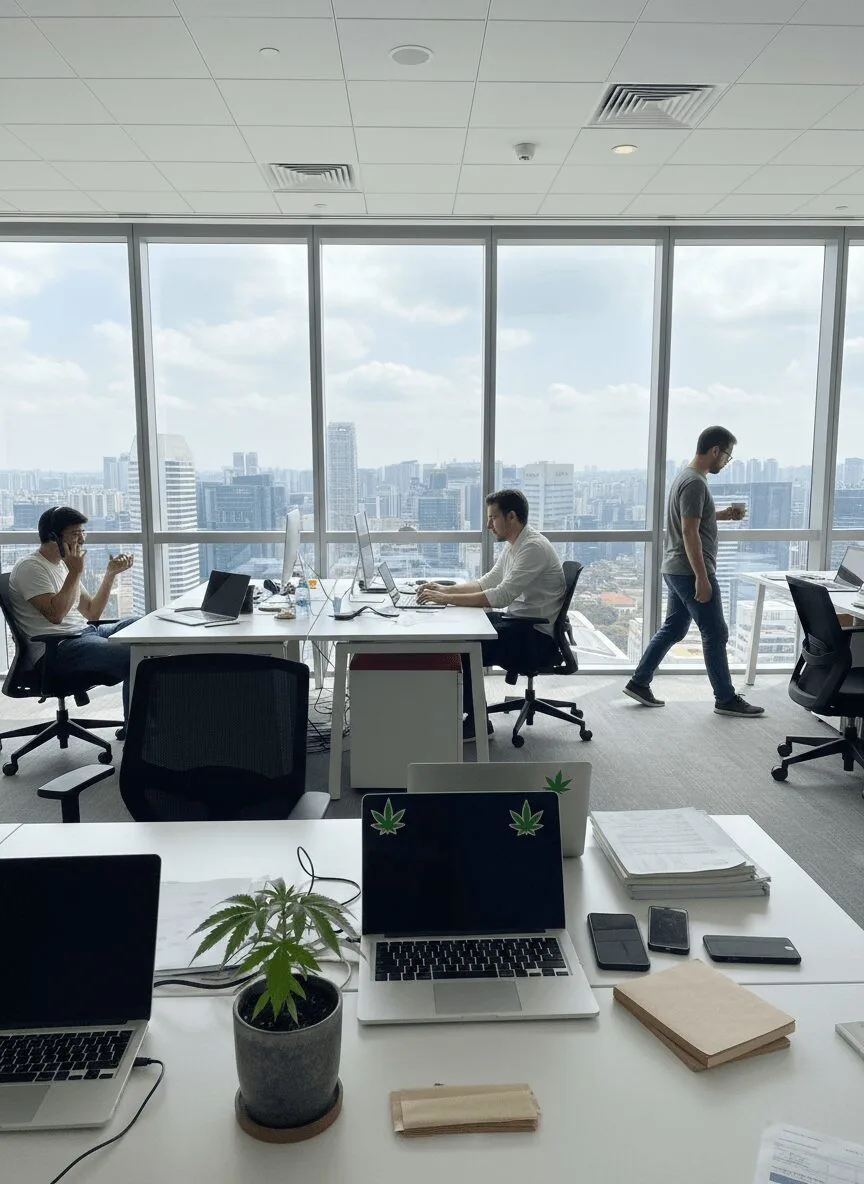
At the same time, green retrofits and wellness-focused renovations have prompted many incumbent tenants to upgrade their spaces, resulting in some creatively repurposed, more casual, and open-plan office layouts—a subtle nod to changing work culture influences, including creative approaches found in sectors such as advanced data center regulations and global shifts embracing cannabis-inspired creativity, even if not legally recognized here.
Expert Insights: Cultural Shifts, Cannabis Creativity & Market Resilience
So, how does all of this tie into the ever-controversial cannabis industry? Even if Singapore CBD office vacancy is dropping for reasons unrelated to legalization, there’s no mistaking the broader cultural shift at play. Industry experts like mg Magazine have long noted that creative industries driven by cannabis-positive values—think flexibility, authenticity, and collaborative energy—are influencing workspace expectations worldwide. The new breed of tenants in the Singapore CBD seems to mirror this ethos, with offices designed for openness, team spontaneity, and “non-corporate” flair.
Longtime industry consultant Justin Leong explains, “Singapore’s demand surge shows just how adaptable global office culture is, everyone’s looking for spaces with real personality, even in the strictest cities. Tenants crave places where creativity flows, collaboration happens naturally, and you don’t feel boxed in by old-school traditions.” (mg Retailer). This trend, found in Singapore as well as in US locales seeing dramatic shifts in everyday life such as Maine’s new normal with legalized marijuana, underlines the global demand for fresh thinking and diverse influences—including those from the cannabis world.
It’s also crucial to note that, while no legal changes on cannabis are expected soon, the global industry’s creativity and relaxed work culture echo in Singapore’s evolving CBD office market. This pattern isn’t just cool, it’s proof of how dynamic workspaces can be, adapting globally even in the face of traditional constraints.
Looking Forward: Evolving CBD Office Culture & the Cannabis Connection
The future for Singapore CBD office vacancy rates remains promising. As flexible office models and wellness-driven upgrades continue, vacancy is projected to stay below 4% well into 2025, according to JLL Research. While Singapore’s regulatory landscape is unlikely to embrace cannabis any time soon, the creativity, efficiency, and community spirit inspired by global cannabis-friendly work cultures are already being subtly woven into CBD offices’ DNA.
In short: Singapore’s CBD market is thriving by absorption of fresh ideas, more human-centric spaces, and a gentle nudge towards flexible norms—sometimes inspired by international cannabis culture, always filtered by local realities. If there’s one takeaway, it’s this: even the sternest cities can’t resist the winds of change forever.
Keep an eye on Singapore CBD office vacancy trends—as they’re a bellwether for business, social change, and the next chapter of workplace evolution.
Originally reported by: realestateasia.com