



Urgent School Zone Marijuana Arrest: What Happened Next?
In today’s fast-changing cannabis world, the term “school zone marijuana arrest” hits harder than just another headline. With legalization making waves nationwide, understanding the stakes of such busts is crucial for anyone interested in cannabis law and culture. This incident isn’t just about one person—it’s about how the industry, justice system, and community all collide at the intersection of progress and policy. Let’s unpack what really went down, why it matters now, and what it could mean for the future of cannabis near our schools.
Understanding the Legal and Social Context
The “school zone marijuana arrest” story sits right at the crossroads of state reforms and lingering federal strictness. Despite legalization in more than half of U.S. states, NORML reports that federal laws still treat cannabis as a Schedule I controlled substance. This federal-state split leads to a patchwork of rules, especially near sensitive locations like schools. States such as Georgia, where East Central Elementary School is located, have held on to tough penalties around schools. Georgia Department of Education regulations and local ordinances often mandate enhanced sentencing for even small amounts of cannabis within 1,000 feet of a school zone. News of a school zone marijuana arrest isn’t surprising—it’s inevitable, given these conflicting signals. Community fears, stigma from decades of prohibition, and ongoing worries about youth safety all influence how aggressively police respond. The ongoing cannabis debate is being shaped not just by enforcement near schools but also by how new hemp laws are impacting neighboring Southern states. Even as the cannabis industry grows, the “school zone” continues to be a pressure point where reform meets resistance. Anyone watching cannabis policy knows, arrests near schools are lightning rods for debate, and often impact greater regulatory trends.
The Facts Behind This School Zone Marijuana Arrest
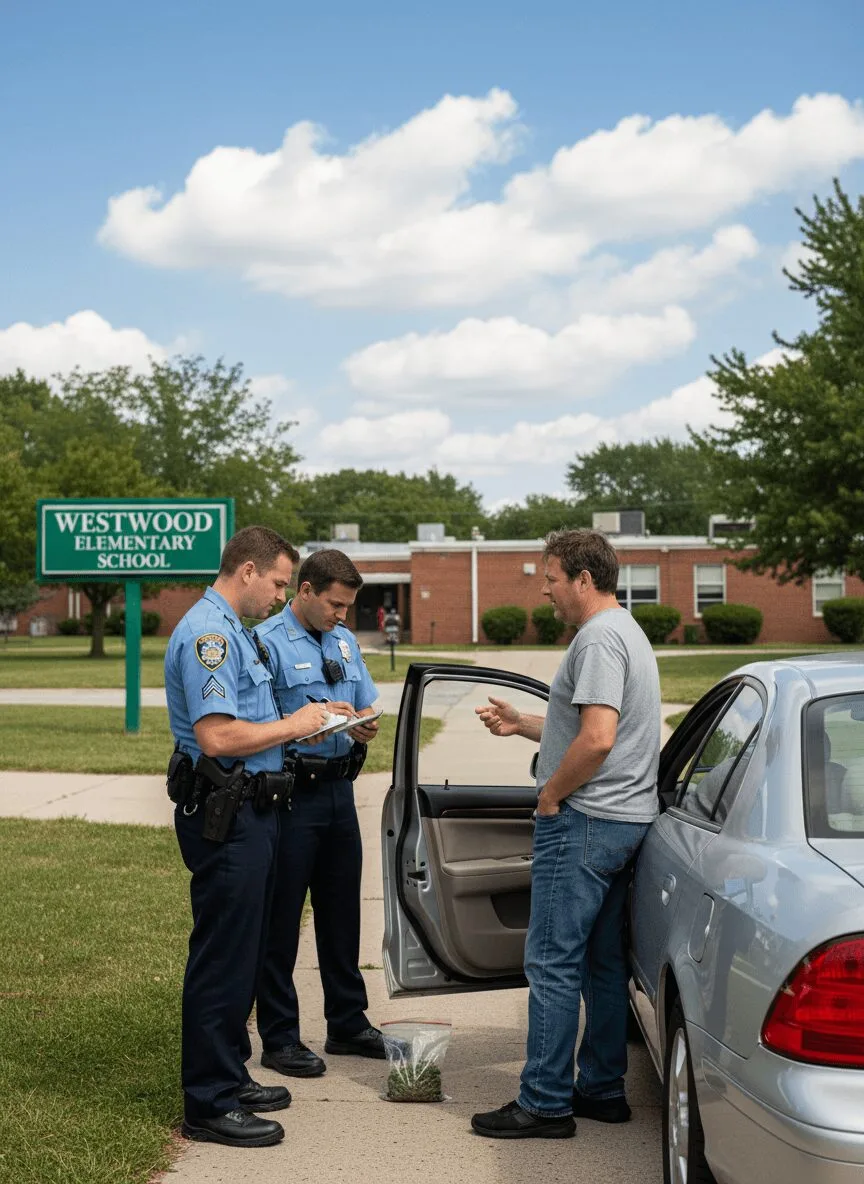
According to Coosa Valley News, the incident took place in February 2026, right next to East Central Elementary in suburban Georgia. Local police officers reported spotting a vehicle near the school exhibiting suspicious behavior, such as nervous glances or parking in the wrong spot. Upon further inspection, officers found a small but significant bag of marijuana visible near the car door, as well as evidence of possible intent to distribute—an upgrade that takes an ordinary bust to a much harsher legal level given the state’s strict laws. The adult suspect, reportedly new to the area, was detained and questioned on the spot, with officers clearly following school zone protocol, according to footage shared by local news. A school zone marijuana arrest like this instantly raises both legal and social stakes, with heightened charges for possession and especially for any suspected trafficking. By the numbers, incidents like these are increasingly rare where cannabis is legal but in prohibition states, the story is often the same: enhanced penalties and major headlines. Recent events in other Southern states show similar issues, including headlines like how mobile marijuana police arrests are sparking debates about cannabis enforcement.
Expert Breakdown: What This Means, Why It Matters, and Broader Impacts
This “school zone marijuana arrest” is a textbook example of America’s uneven cannabis laws running headfirst into real life. Drawing from High Times analysis, experts argue such arrests do more to entrench stigma than truly protect youth. When you criminalize cannabis near schools, you rarely target major traffickers, instead, you catch locals and create lifelong consequences for actions that would be misdemeanors just miles away,
explains cannabis policy attorney Lisa Johnson in a Cannabis Business Times interview. Industry pros see a pattern: increased arrests in school zones right before legislative sessions, almost as if law enforcement is sending a message. Further, Leafly’s 2024 report shows cannabis-related youth incidents have not increased in legalized states, suggesting that enhanced penalties may be more about politics than public safety. Still, families and school staff remain sensitive about anything near classrooms, and incidents like these fuel ongoing parental concern. These consequences are felt in other communities too, such as when arrests involving drugs and guns spark wider debates about cannabis policy. The stigma is tough to shake, even as the country warms to safe, adult-use cannabis.
The Path Forward: Growth, Education, and Smarter Laws
Every time a school zone marijuana arrest makes local headlines, it reignites debates about justice, safety, and change. The industry’s future will be shaped not just by market growth or new products, but by smarter, balanced laws and honest public dialogue. Efforts by groups like Drug Policy Alliance push for modernizing school zone sentencing—arguing that proportionality and real prevention should guide reform, not fear-based doubling down. As more states modernize their cannabis laws, social perceptions are shifting. The tide is turning: responsible use, comprehensive education, and clear rules can keep kids safe without turning adults into felons for a bag of weed. The school zone marijuana arrest in Georgia should be a wake-up call—not just for law enforcement, but for legislators, advocates, and everyday citizens. Let’s hope the next headline highlights progress, not punishment. As the National Conference of State Legislatures notes, “State legalization and better-informed policy can provide balanced solutions for all.” The road ahead looks brighter—just keep an eye out for potholes along the way.
Originally reported by: coosavalleynews.com