


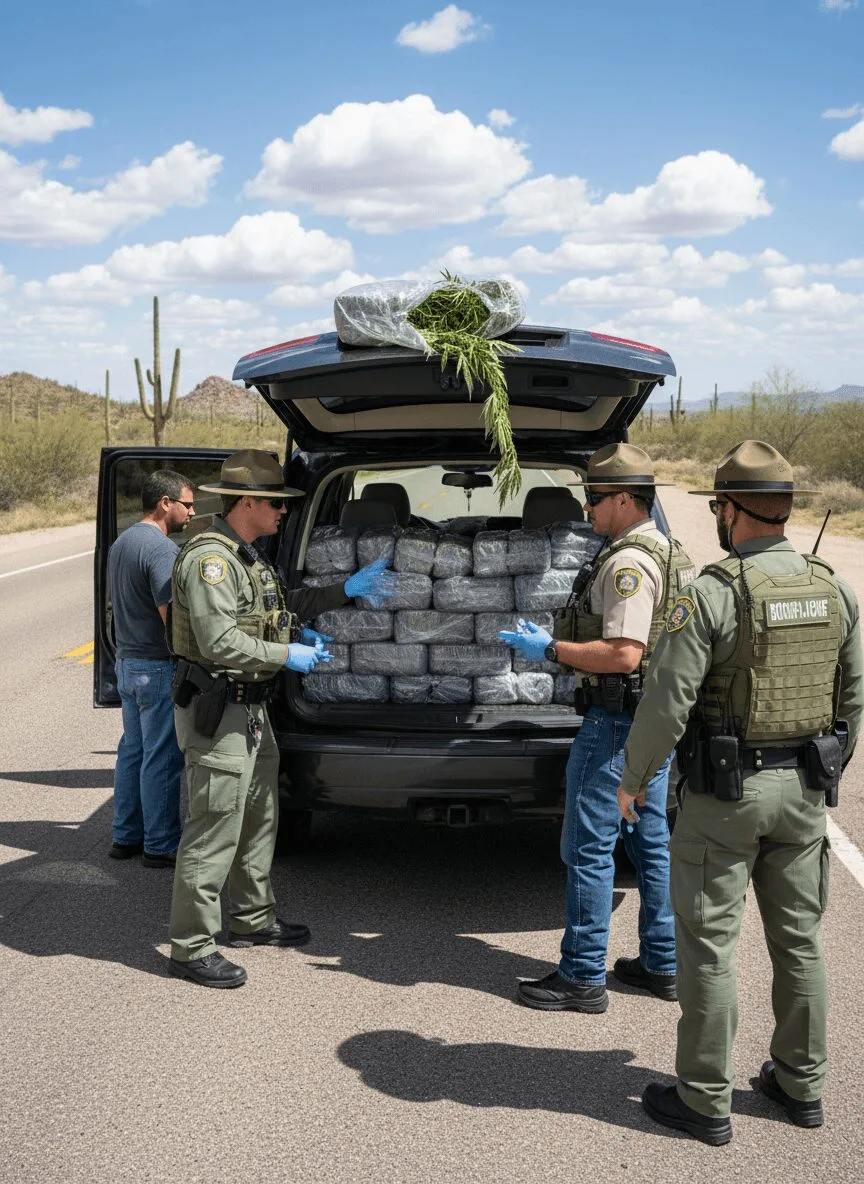
Border Patrol marijuana seizure: Massive Bust Unveiled
It’s headline-grabbing moments like the recent Border Patrol marijuana seizure that underscore ongoing tensions at the intersection of cannabis legalization, enforcement, and cross-border smuggling. With the U.S. legal weed market booming and border states grappling with shifting attitudes, big busts make the news for good reason. Here we break down what went down, why it matters, and what this all signals for the cannabis movement, law enforcement policies, and the industry’s long-term trajectory.
The Legal and Social Backdrop Behind Border Patrol Marijuana Seizure
To understand the significance of this Border Patrol marijuana seizure, it’s essential to frame it in today’s legal landscape. Federal law still classifies cannabis as a Schedule I substance, creating a patchwork of risk, enforcement, and ambiguity at state borders, especially in regions with legalized recreational or medical markets. According to Pew Research Center, public support for cannabis legalization has hit record highs, but enforcement operations persist, particularly in areas close to international borders where trafficking risks remain acute.
States like California, Colorado, and New Mexico have legitimized cannabis, yet supply-and-demand imbalances and high taxation foster incentives for illicit trade. Driven by profits, organized groups still try to exploit market mismatches, and recent regulatory shifts, like those highlighted in city-by-city cannabis policy scorecards in California, show how local laws create unique dynamics. NORML notes that legal ambiguities and uneven enforcement inspire both innovation and risk-taking, fueling high-profile busts. For border agencies, the clash is as much about public messaging as it is about crime fighting.
Major Facts: Breaking Down the Border Patrol Marijuana Seizure
According to the original KFOX report, this Border Patrol marijuana seizure took place in the rugged landscape near El Paso, Texas, a crucial corridor known for fast-moving smuggling traffic. Agents on patrol identified, then pursued, a high-speed SUV traveling suspiciously along a desert highway. The chase escalated before officers managed to stop the vehicle safely.
Upon inspection, Border Patrol discovered over 416 pounds of marijuana packed in plastic-wrapped bundles, stashed in the open hatch. The SUV, according to sources, was unregistered locally. The suspects attempted to evade officers, but were apprehended after a brief pursuit, a scenario becoming more frequent as traffickers adapt their tactics. For insight into how shifting statewide policies continue to shape larger enforcement trends, one can look at evolving regulations in major cannabis markets like Massachusetts. Incident details were corroborated by imagery from the seizure scene, revealing the unmistakable bulk of illicit cannabis often destined for illicit state-side sales.
This isn’t an isolated event: U.S. Customs and Border Protection routinely reports multi-hundred-pound seizures yearly. According to CBP statistics, tens of thousands of pounds are still seized annually, even as legal markets expand. Such busts draw attention to the ongoing tug-of-war between prohibitionist enforcement and industry realities.
Expert Analysis: Impacts, Industry Insights & Pro-Cannabis View
So what do these headline-making Border Patrol marijuana seizure moments mean for everyday industry stakeholders and advocates? On one hand, they highlight persistent supply chain risks, regulatory gray zones, and the slow pace of federal reform. On the other, they cast light on how enforcement remains a reality, even as most Americans favor legalization. As Marijuana Moment emphasizes, ‘Smuggling persists not because cannabis isn’t wanted, but because laws are lagging behind public demand.’ This was echoed by Ethan Nadelmann, founder of the Drug Policy Alliance, who told industry reporters, ‘The more sensible and regulated the market, the less incentive there is for this kind of illicit activity.’
It’s also critical to recognize the economic drivers—illicit cross-border trade often spikes in regions where legal retail prices outpace illicit supply, or access remains restricted by overbearing regulations. For states navigating major legislative changes and lawsuits, understanding how antitrust concerns are shaping the cannabis industry in places like Ohio is increasingly relevant. Reports from Leafly and Cannabis Business Times regularly note that ‘enforcement alone isn’t enough; healthy legal markets built on fair access, reasonable taxes, and strong education will do more to undermine smuggling than any checkpoint ever could.’
In short, as the movement for reform intensifies, these large-scale seizures increasingly look like symptoms of an evolving, not failing, system.
What’s Next? Growth, Reform, and a Path Forward
Despite these headline-grabbing Border Patrol marijuana seizure stories, the broader industry trajectory is upward. Regulatory reforms are gaining bipartisan traction. New states are opening adult-use markets, and the stigma is gradually receding. According to Headset.io, U.S. legal cannabis sales exceeded $30 billion in 2023—showing the unstoppable momentum behind market demand and normalization.
Law enforcement’s job will remain challenging until federal regulations evolve. The best solutions? Thoughtful legalization, equitable access, lower taxes, and public education. Expect more debates, more headlines, and—eventually—smarter policies that blur the lines between what was once ‘prohibited’ and what’s increasingly accepted. For now, every high-profile Border Patrol marijuana seizure only reminds us how far we’ve come, and how much work is left to do for safe, legal, and stigma-free cannabis.
Originally reported by: kfoxtv.com