

Cherryvale drug bust: Five Arrested Near Local School
The cannabis scene is shifting—fast. This week, the Cherryvale drug bust has everyone in the Midwest (and honestly, across cannabis circles) buzzing. With five folks nabbed near a local school, this news hits a nerve about community safety, evolving drug laws, and the real-life consequences of our patchwork regulations. If you care about how cannabis is policed, how communities react, and where the legal landscape is heading, the Cherryvale drug bust is one you can’t ignore.
Local Policy, Community Tensions, and Market Shifts: Setting the Scene
Cannabis policy in Kansas has always lagged behind much of the country. While neighboring states are loosening up, Kansas holds tight to strict prohibition, leading to community tensions and a thriving illicit market, as highlighted by NORML. The Cherryvale drug bust underscores Kansas’ tough approach, particularly in small towns where opinions diverge over cannabis’s place in society. Reports in The Wichita Eagle note repeated friction between evolving attitudes and old-school enforcement. Add in proximity to a school, and stakes get higher: federal drug-free zones mean severe legal exposure. State legislators have danced around reform for years, and cannabis remains a culture war flashpoint. Notably, contrast this with other regions where cannabis sales directly support local initiatives, as seen when legal weed powers Jersey Shore towns. The Cherryvale drug bust represents a collision of outdated law, new market realities, and uneasy public sentiment in small-town America.
What Really Happened in the Cherryvale Drug Bust?
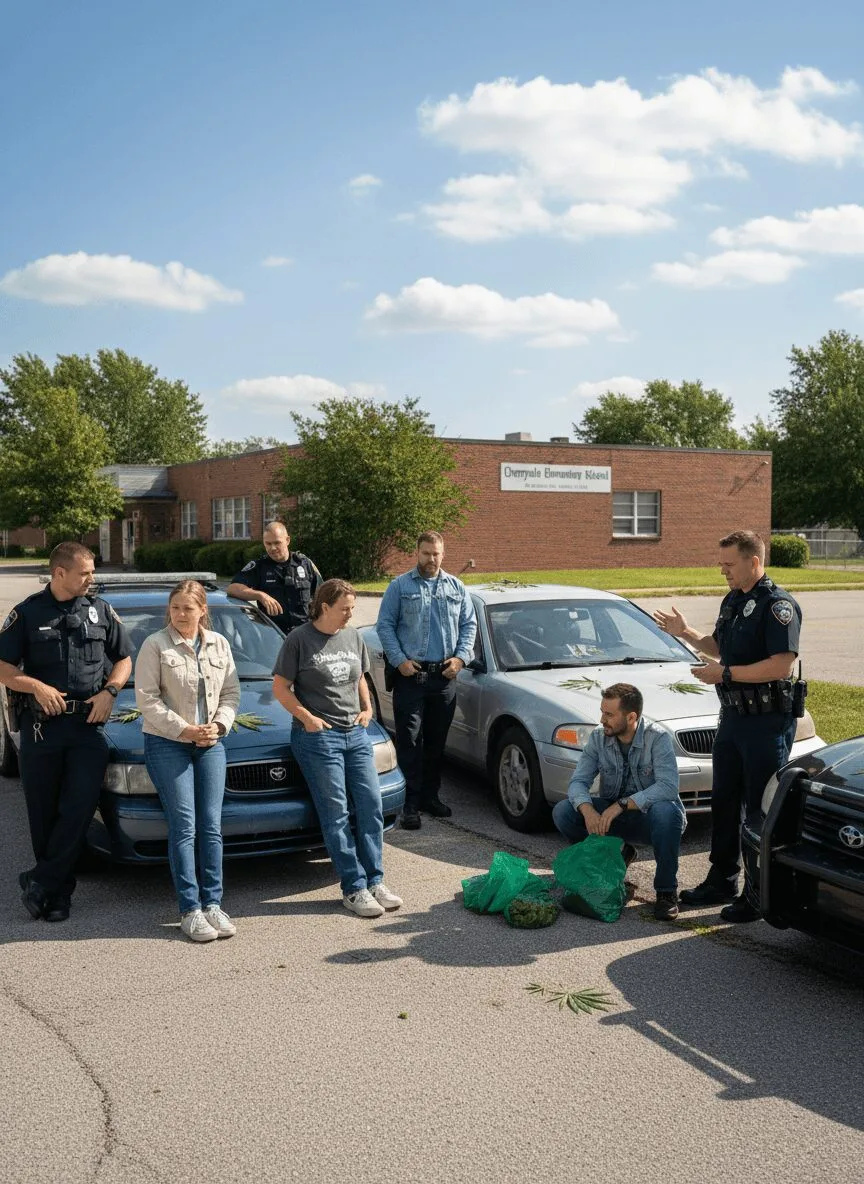
According to the original KWCH news report, five adults were arrested outside a modest Cherryvale school on January 21, 2026. Police cruisers boxed in two vehicles following a tip about suspicious activity. Officers on the scene detained three men and two women in their late 20s to late 40s. On-site searches produced several evidence bags with cannabis flower, resin cartridges, a digital scale, and a wad of cash—charges included possession with intent to distribute within 1,000 feet of a school, which under Kansas Statutes 21-5709 can bring enhanced penalties. The incident played out in broad daylight, and police described the suspects as “cooperative.” Community members witnessed the aftermath, with some filming. The Cherryvale drug bust is not the first of its kind locally; similar incidents featured in local media often reignite debates about policy and public safety. Much like other small towns experiencing public debate over marijuana, discussions echo the frustrations and safety concerns observed after a neighborhood uproar about cannabis odor that led to local investigation and debate in a different community.
Expert Analysis and a Pro-Cannabis Perspective
Stepping back, the Cherryvale drug bust mirrors a larger national clash where old law meets new normalization. As dispensaries flourish just hours away, local police still enforce cannabis prohibition rigidly, especially near schools. Is this punitive strategy really effective?
Cannabis expertise and sociological studies increasingly agree that crackdowns in restrictive states do not deter use—they instead criminalize otherwise law-abiding people. MJBizDaily notes the illicit market in prohibition states remains robust, feeding riskier transactions and inconsistent quality. Dr. Amanda Reiman, a cannabis policy veteran, reminds us in Leafly: “Punitive enforcement has always failed to reduce use, it just burdens communities with criminal records and prevents honest conversations about safety.” The Cherryvale drug bust isn’t simply about five adults, it’s a microcosm of a policy approach that turns minor possession into life-altering legal dramas. In fact, most of those arrested are often everyday people. It is worth considering how, for some, visits to correctional facilities have ended in unexpected arrests related to marijuana possession, further highlighting how outdated laws continue to impact families. In a regulated environment, these same adults might be contributing tax dollars, not risking felony charges. The resources Kansas expends on law enforcement could better align with public opinion and regional markets: recent polling by Pew Research Center shows two-thirds of Americans across parties support legalization—yet state enforcement persists.
Looking Forward: Cannabis Reform, Realism, and Optimism
The Cherryvale drug bust highlights the gap between local law and regional cannabis currents. With federal reviews of marijuana’s schedule and Midwest neighbors moving ahead, Kansas faces tough policy decisions—does it keep clinging to the old or join a growing wave of pragmatic reform?
Progressive regulation is proving itself nationwide, cutting black market supply and funding essential services. Communities can revise rules to keep kids safe and adults out of prison without pretending prohibition works—a fact highlighted by Governing.com. Change won’t happen overnight, but each Cherryvale drug bust adds fuel to the conversation. Expect more citizens, lawmakers, and industry pros pushing for a smarter, more compassionate policy soon. That’s worth sparking up a real discussion about.
Originally reported by: kwch.com