Cocaine Trafficking Kansas Highway: Shocking Arrest Breakdown
Lately, highways across the Midwest have become hotspots for intense law enforcement crackdowns, especially when it comes to cocaine trafficking Kansas highway cases. From shifting regulations to rapidly evolving market trends, everyone’s got an eye on interstate busts these days. With cannabis reform surging and legal lines blurring, it’s never been more crucial to break down what these high-profile traffic stops really mean. In this article, we’ll dive into key updates, legal battles, and industry perspectives, keeping it real with a cannabis expert’s lens—and yes, we’ll talk straight about why the cocaine trafficking Kansas highway situation is dominating headlines and causing ripples through both the legal and underground markets.
Changing Laws and Social Attitudes on Drug Enforcement
The regulatory landscape around drug enforcement has been shifting dramatically, both federally and locally. While cannabis is experiencing record-setting acceptance and billions in legal sales, cocaine remains firmly illegal nationwide. But here’s the twist, law enforcement resources are getting reallocated, and priorities are changing as public opinion warms to regulated cannabis markets.
According to Pew Research Center, nearly 88% of Americans now support some form of cannabis legalization. The fact that states are creating new grant opportunities and frameworks for prospective business owners—such as Illinois’ visionary grants for entrepreneurs in 2024—reflects a national shift toward a regulated market. Yet, major busts like those tied to cocaine trafficking Kansas highway incidents still make headlines because of the harsh penalties and federal stance on hard drugs. This social and legal contrast means law enforcement’s tactics and public perception vary dramatically compared to cannabis cases. Authorities tend to publicize cocaine seizures as warnings, but market realities, and persistent demand, tell a more nuanced story.
Breaking Down the Latest Cocaine Trafficking Kansas Highway Case
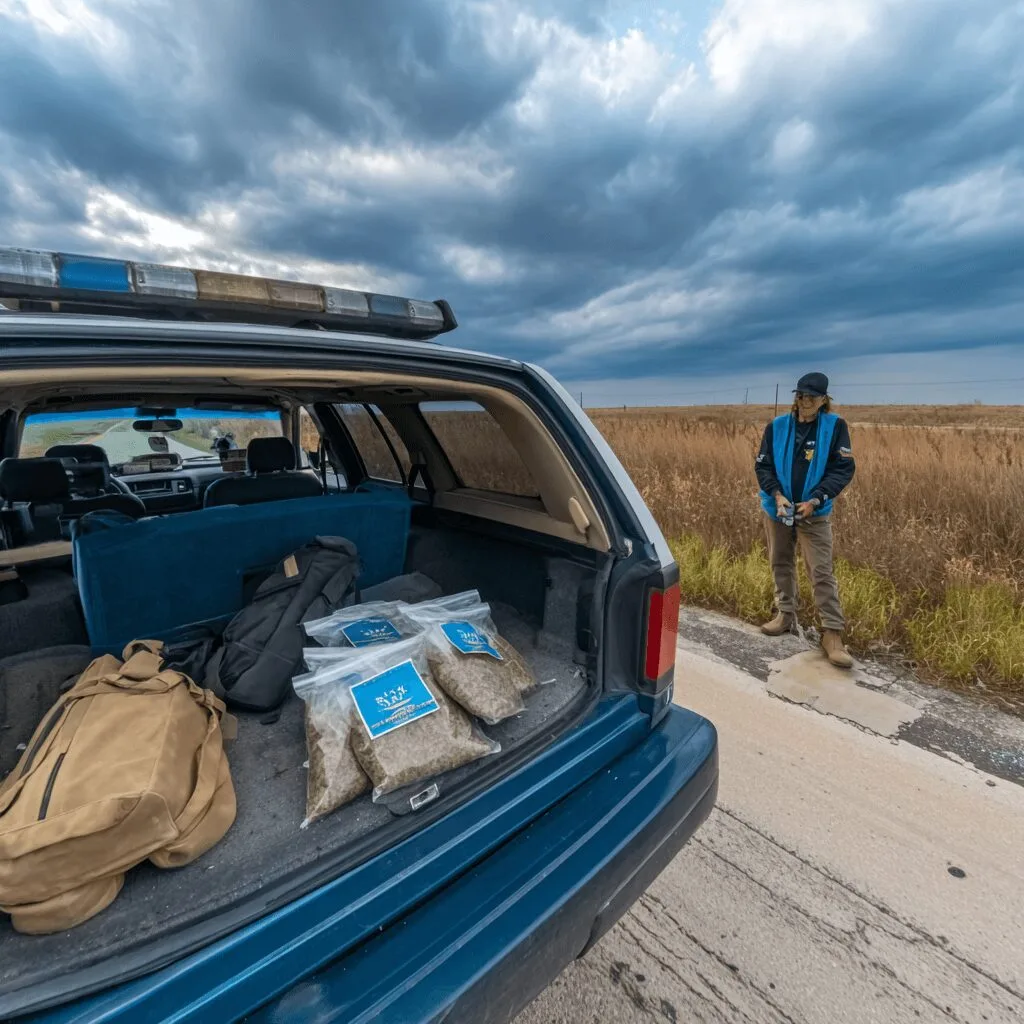
The most recent bust that everyone’s talking about happened on U.S. Highway 183 outside Hays, Kansas, when a Russell County deputy stopped a vehicle for a routine traffic infraction. What started as a basic shoulder stop quickly escalated, deputies spotted a duffel inside, and upon further investigation, discovered sealed bags suspected to be cannabis along with additional narcotics, later confirmed as cocaine.
The driver, whose identity authorities have kept under wraps pending trial, was arrested on multiple counts, including cocaine trafficking, illegal possession, and intent to distribute. The incident happened last week, according to the original source and Russell County Sheriff’s Office briefings. This arrest drew attention because of the location, Kansas highways have become known corridors for illicit transit between states with differing cannabis and narcotics laws. The way modern dispensaries, like those recently approved in smaller towns, are opening up—see how one community celebrated its new era with a dispensary—contrasts sharply with the stiff federal response to cocaine. The bust also highlighted the crossover in drug enforcement, with officers often encountering both cannabis and harder substances in a single stop. Penalties for cocaine trafficking Kansas highway cases are significant, often involving mandatory minimums and federal prosecution, regardless of how normalized cannabis might be just a few states away.
Expert Insights, Interpreting the Legal and Industry Impact
So, what does this all mean for the cannabis game, and should folks be worried about being lumped in with harder substances? According to cannabis policy analyst Morgan Fox of the Marijuana Policy Project, “As enforcement shifts and legalization becomes mainstream, law enforcement should differentiate strictly between cannabis and truly dangerous substances like cocaine. Treating them the same undermines public trust and wastes resources that could target genuine threats.”
Industry insiders also note that busts such as those along the cocaine trafficking Kansas highway routes may inadvertently boost the case for full-spectrum cannabis reform. As cannabis normalization separates it further from other drugs, state-level markets thrive and the gray area gets smaller. Recent decriminalization measures across states are underscoring the different treatment for non-violent cannabis issues as compared to harder drugs. According to Leafly, new cannabis markets are opening monthly, encouraging safer supply chains and reducing illicit crossover. The harsh contrast between penalties for cocaine and regulated cannabis also sparks public debate about prioritizing harm reduction and smarter enforcement. These legal patchworks, and the headlines they create, underscore the awkwardness of our current system.
Future Outlook: From Legal Patchwork to Progressive Policy
Despite the continued presence of cocaine trafficking Kansas highway stories in the news, the momentum for cannabis industry growth and regulatory improvement isn’t slowing down. In fact, these cases are prompting more calls for smarter, differentiated law enforcement—putting pressure on lawmakers to modernize outdated statutes.
Looking ahead, expect cannabis to become even more separated from illicit drug crackdowns as new regulatory regimes come online. States like Missouri and Maryland have set strong examples of positive industry evolution (Marijuana Moment). The shock factor of cocaine trafficking Kansas highway busts may fade as society demands logical, evidence-driven policy—and as legal cannabis continues to take center stage. For anyone navigating this landscape, that’s a promising horizon worth watching.
Originally reported by: hayspost.com