


Federal Cannabis Legalization: Executive Order Breakthrough
The federal cannabis legalization debate just hit a new high with a game-changing executive order. For advocates, investors, and anyone who’s watched the slow grind of U.S. cannabis reform, these are historic times. This bold federal move could finally bring clarity to a multi-billion dollar industry stuck in limbo. Right now, curiosity, anxiety, and excitement are all running wild across Capitol Hill and Main Street as everyone asks: what’s next for cannabis in America? This article breaks down why federal cannabis legalization is surging forward, what’s changed, and why it matters more than ever.
Regulatory Roadblocks and the Push for Reform
Until now, federal cannabis legalization has faced layers of legal and social complexity. The Controlled Substances Act of 1970 slammed cannabis into Schedule I, making it federally illegal even as states like Oregon, California, and Illinois built thriving legal markets. Banking has been a nightmare: anyone working in or with the cannabis industry has struggled with red tape, as highlighted by NORML and Leafly. Social justice issues also loom large, with decades of prohibition disproportionately impacting marginalized communities (see ACLU’s analyses). Recent years brought growing bipartisan support in Congress and shifting public opinion, as a Gallup poll from late 2023 showed nearly 70% of Americans favor legalization. In the South and Midwest, enforcement can look very different; for instance, recent crackdowns on cannabis retailers in Birmingham reveal the uneven landscape businesses must navigate. In 2024, the cannabis movement finds itself at a moment where state-led reforms and consumer demand make federal cannabis legalization more urgent, and more achievable, than ever before.
Historic Executive Order: What Just Changed?
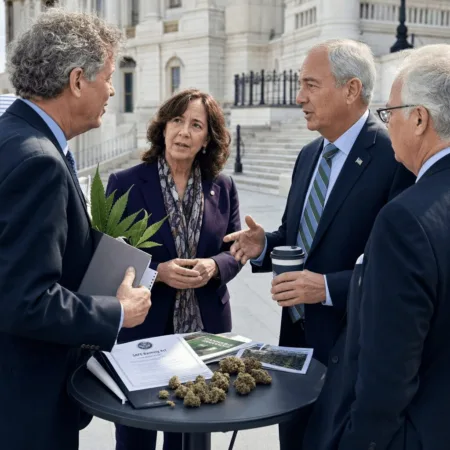
On December 1, 2025, a sweeping executive order was signed, signaling the most significant federal cannabis legalization milestone yet. According to reporting by NAI 500, the order directs key federal agencies, especially the Department of Justice and Health and Human Services, to revise cannabis scheduling and lay regulatory groundwork for legal national commerce. The White House called this “a new era for cannabis justice.” Lawmakers and industry leaders, like MJBizDaily and the National Organization for the Reform of Marijuana Laws (NORML), have verified that federal licensing, taxation, and banking guidance are all included in the plan. Market analysts project that legalization could go into effect as early as 2026. Major MSOs (multi-state operators) like Curaleaf and Trulieve have seen share prices rally in response. Shifts in everyday life, commerce, and policy are widely anticipated as a result of this executive action. This executive order doesn’t legalize cannabis overnight, but it mandates regulatory agencies to propose actionable frameworks within 180 days, making federal cannabis legalization no longer a pipe dream, but an imminent reality.
Expert Take: What This Means for the Cannabis Industry
The federal cannabis legalization move is rocking the industry, but what does it actually mean for people in the trenches? As Leafly News notes, the change offers a clear legal path for businesses and could unlock pent-up investment from institutional banks. “This is the regulatory signal the market has begged for. We’re finally going to see fair taxation, safe access, and a level playing field,” says NORML’s Executive Director, Erik Altieri (NORML). The executive order also aims to address cannabis-related criminal records, fast-tracking clemency and expungement efforts. Industry analysts expect innovations in product safety, marketing, and interstate commerce after the dust settles. Some equity advocates are cautiously optimistic, noting that “social justice can actually be baked into federal cannabis legalization if Congress and federal agencies keep their promises” (reported by Brookings Institution). With new laws emerging in regions like Oklahoma, those interested in policy shifts for medical marijuana and patient impacts can follow key developments in state-level medical marijuana laws, which set precedents for broader federal action.
Where Do We Go From Here? The Buzz About Tomorrow
The executive order’s impact is already sparking the next round of debate and innovation. Investors, activists, and entrepreneurs are moving quickly, working to ensure federal cannabis legalization remains both profitable and equitable. The American cannabis industry could see explosive growth, real social justice reform, and a modern regulatory environment. As explained by MJBizDaily, the next two years are critical: the final regulations and Congressional input will decide how smoothly federal cannabis legalization rolls out. Despite lingering uncertainty, the momentum is stronger than ever. With the door now open, there’s never been a more exciting—and promising—moment for federal cannabis legalization in history.
Originally reported by: nai500.com