Hemp THC Ban Legislation: Nancy Mace Fights for Legal Reform
Things are heating up in DC, and the phrase on everyone’s lips right now is “Hemp THC Ban Legislation.” Yeah, you read that right—whether you’re an industry insider, a small business owner, or just a curious citizen, this issue has real skin in the game. Hemp-based delta-8 and similar cannabinoids are everywhere—vape shops, wellness stores, even supermarket shelves—sparked by the 2018 Farm Bill’s explosive effect. But recent political shakeups threaten this green boom: Congress just fast-tracked a ban on intoxicating hemp THC, sending shockwaves through the market. Enter Rep. Nancy Mace with a bold move to reverse course. In this deep dive, you’ll get the backstory, the current battleground, and a clear-eyed breakdown of what this “Hemp THC Ban Legislation” means for consumers, producers, and the whole cannabis movement. Buckle up, let’s roll.
The Regulatory Roots: How We Got Here with Hemp THC Ban Legislation
To get why Hemp THC Ban Legislation is blowing up right now, let’s rewind. Back in 2018, the Farm Bill swung open the doors for hemp farming, making hemp (with less than 0.3% delta-9 THC) federally legal. Cue a tidal wave of innovation and, let’s be real, some wild-west chemistry: creators started tweaking hemp-derived cannabinoids like delta-8 and HHC, both of which pack a psychoactive punch but didn’t fit the letter of the law. Now, federal regulators and states are scrambling to play catch up, with dozens of states enacting their own rules, some open to new hemp products and others hitting hard with blanket bans. The confusion was so gnarly the FDA and DEA had to clarify where these minor cannabinoids stand, but let’s just say the water remains muddy. Some states, like those highlighted in the recent Montana hemp tariffs meeting, are also seeing farmers rally to influence changing industry policies. All this regulatory chaos set the stage for the big Hemp THC Ban Legislation battle currently unfolding in Congress.
Key Developments: Nancy Mace and the Fight Against the Ban
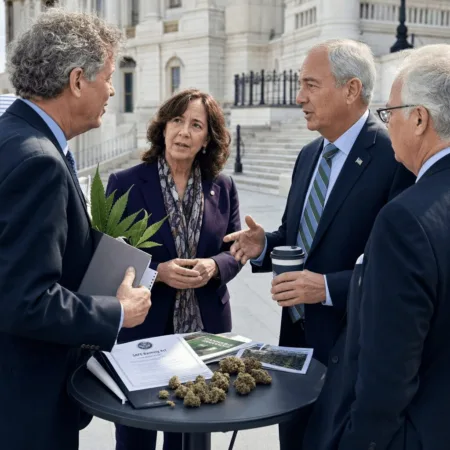
Last month, a wave hit the hemp world when Congress (on the wings of the latest Farm Bill negotiations) folded a sly provision into law, effectively banning many hemp-derived intoxicating cannabinoids. Overnight, products lining the shelves of shops from Texas to Vermont suddenly faced legal whiplash. Marijuana Moment reported Rep. Nancy Mace, a fierce advocate from South Carolina, swiftly started circling a bill aiming to block this new ban, flipping the script on the recently ratified legislation, which former President Trump had signed off on. The move comes just as small hemp businesses fear sudden shutdowns, and advocates argue this bans not only target so-called “intoxicating cannabinoids” but also sweep up legitimate non-intoxicating hemp products by mistake. Echoes of the Florida hemp THC law shake-up can be seen in how states react, showing that legal battles over what’s allowed remain heated across the U.S. If Mace’s bill gains traction, it could overturn the ban federally, restoring a legal lifeline to millions invested in the hemp sector. All eyes are now on the House floor and key industry voices, with many watching for leadership from lawmakers who understand both the science and social context of the Hemp THC Ban Legislation debate.
Expert Insights: Why This Hemp THC Ban Legislation Could Shape Cannabis Policy for Years
The hemp and cannabis community is sounding off, and for good reason. The uproar around Hemp THC Ban Legislation isn’t just about the molecules, it’s about economics, equity, and public health transparency. According to Leafly’s recent in-depth feature, hundreds of small hemp businesses have already issued open letters to Congress, arguing that blanket bans punish innovation and ignore consumer demand. As cannabis attorney Gretchen Gailey recently stated, “If lawmakers keep slamming the brakes on every hemp innovation, they’re just boosting the unregulated black market, not protecting people.” The push-and-pull between regulators, the free market, and evolving public health science is only going to intensify. According to a NORML breakdown, the market for legal hemp-derived THC is close to $4 billion a year, with millions in tax and community revenue at stake. Looking at the ongoing impact on cannabis revenue, states like Ohio have seen delays in city-level tax distribution from marijuana sales, highlighting how unresolved legislation affects communities on many levels. The lesson? Smart, nuanced regulation beats reactionary moves every time, especially with so much on the line. It’s no wonder trusted voices like the MJBizDaily editorial board insist, “We need clear laws, but let’s not torch an entire industry out of fear.”
Future Outlook: Hemp THC Ban Legislation and the Road Ahead
While the battle lines over Hemp THC Ban Legislation are drawn, hope is alive for compromise and clarity. From a bird’s eye view, the U.S. cannabis industry is growing up—it’s getting bigger, more regulated, and, honestly, more respected. According to Cannabis Business Times, states are finally starting to differentiate sensible policy from outdated stigma. Whether Nancy Mace’s bill stops the recent ban in its tracks or sparks a wider reform conversation, one thing’s clear: hemp and cannabis aren’t vanishing. They’re evolving, and so are the rules shaping their future. As industry pros know—stay involved, stay informed, and keep fighting for fair, balanced laws. If you care about freedom, business, and responsible access, the Hemp THC Ban Legislation is the conversation you can’t afford to miss in 2024.
Originally reported by: marijuanamoment.net