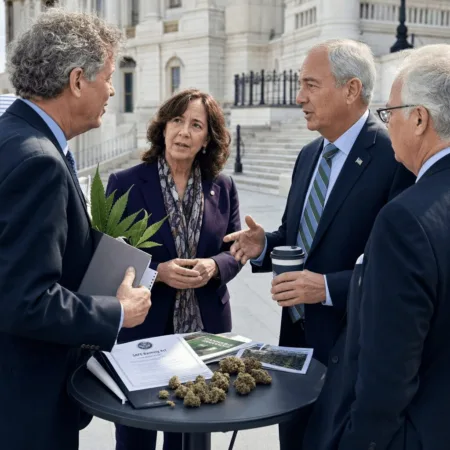

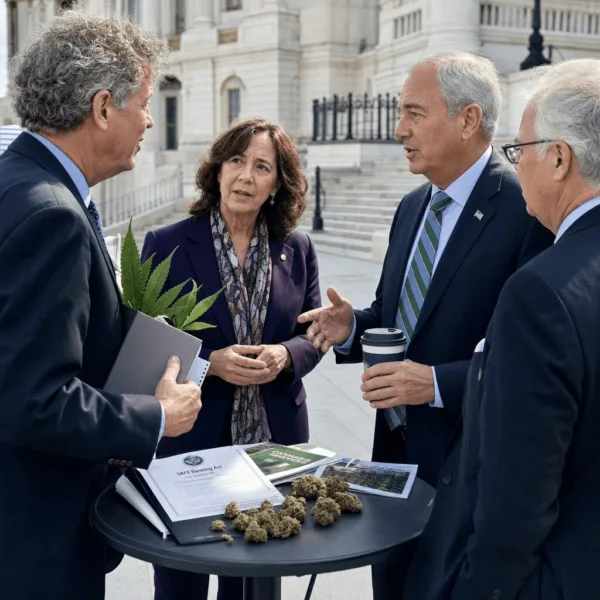



Supreme Court marijuana challenge: Will cannabis laws change?
Let’s just say it: the Supreme Court marijuana challenge has the industry buzzing with both excitement and anxiety. With public pressure mounting, shifting federal policies, and cannabis stocks dancing like it’s 4/20, everyone wants to know if this bold move could reshape prohibition. This case is more than just a courtroom drama—it’s a crucial flashpoint for booming legal markets, frustrated entrepreneurs, and anyone hoping for federal reform. Here, we break down what the Supreme Court marijuana challenge means right now, what the big players are saying, and how it could impact every level of the cannabis ecosystem.
The Roots Behind the Supreme Court Marijuana Challenge
To understand what’s at stake, you need to know how cannabis law has worked in the U.S. for decades. Despite more than half of states legalizing marijuana for medical or recreational use (according to Pew Research Center), federal prohibition has never budged. Cannabis remains a Schedule I substance, lumped in at the top with drugs like heroin. That means federal law treats state-legal dispensary owners as criminals and blocks cannabis businesses from basic banking or tax deductions (Forbes). Meanwhile, the public has grown louder, demanding change, especially as the legal cannabis market has boomed, now projected to top $40 billion soon (Wall Street Journal). Issues of regulation and enforcement can create ripples across local communities, such as when law enforcement actions shape perceptions about cannabis and related substances, as seen in cases like how home raids involving meth and marijuana can impact both local law and policy. The Supreme Court marijuana challenge lands at a moment when lawmakers, voters, and entrepreneurs are all impatient for clarity and fairness in cannabis law.
Key Developments: Why the Supreme Court Marijuana Challenge Matters Now
Let’s light up the main event, In 2024, a group of prominent cannabis companies, including Terrapin Care Station and Crystal Pure, filed a petition for the U.S. Supreme Court to review the constitutionality of federal marijuana prohibition. The companies argue that clashing state and federal cannabis laws create legal chaos, violate constitutional protections, and financially harm licensed businesses. (Marijuana Moment) reported that, in their May 2024 filing, these operators cite decades of Supreme Court precedent, specifically the old Gonzales v. Raich decision. That case supported federal prohibition in 2005, but the petitioners now argue that the massive growth of legal cannabis markets and the spread of reform have changed the facts on the ground.
This Supreme Court marijuana challenge isn’t just legal fireworks, it’s driven by industry pain points like IRS 280E restrictions (making dispensaries pay sky-high taxes), risk of federal raids, and the cost of compliance with conflicting regulations. The companies involved want the Court to consider due process rights and equal protection, and they point to bipartisan support for change, including efforts in Congress like the SAFER Banking Act, which seeks to expand access to banking for cannabis businesses (congress.gov). Changing policies and oversight can stir major uncertainty in regulated markets, evident in examples where state-level medical marijuana programs face turbulence and South Dakota’s medical marijuana oversight shake-up sparks industry anxiety. With the Biden administration signaling some willingness to reschedule cannabis and more states expected to vote on legalization in 2024, the stakes couldn’t be higher as the Supreme Court is asked to step in.
Industry Analysis: Why This Supreme Court Marijuana Challenge Is a Big Deal
Like most movers in cannabis, I’ve seen lawsuits come and go, but the Supreme Court marijuana challenge is no ordinary gamble. This time, it’s not activists or patients, it’s actual, established businesses pulling up to D.C., saying “enough is enough.” If SCOTUS agrees to hear the case, it could either cement federal control or, perhaps, light the way for the end of national prohibition.
What makes 2024 different? According to leading legal expert Hilary Bricken, writing for Canna Law Blog, “The Supreme Court is getting more pressure from the patchwork of state laws and business confusion than ever before.” With over 40 states running some form of legal market, current laws are stretching at the seams. If the Court rules for change, even in a narrow decision, it would send shockwaves through not just the cannabis space but for federalism debates nationwide.
Industry leaders point out that the Supreme Court marijuana challenge could spark not just regulatory changes, but massive investment, innovation, and growth—if banks and investors finally get green lights. As Leafly notes, “A favorable Supreme Court decision could open the floodgates for normalized cannabis business operations, especially in banking, logistics, and research.” When trends shift and public perceptions evolve quickly, it can underscore how America’s relationship with cannabis keeps changing and marijuana use trends have begun to surpass those of cigarettes across the country. In short, this case is a legal turning point with real, everyday consequences for millions, from cultivators to consumers.
The Road Ahead: Is the End of Federal Prohibition Finally Near?
So, what’s next as the Supreme Court marijuana challenge moves forward? If the Court takes the case, oral arguments and a final ruling could come in months, not years. Even if SCOTUS declines to hear it, this high-profile push amps up the chorus for federal reform and keeps pressure on Congress and regulators. Recent polling from Gallup shows that nearly 70% of Americans support legalization. The culture—and the market—is already moving, with or without legal permission. Cannabis, as an industry and a movement, has never been more mainstream or better organized.
Here’s the takeaway: No matter what happens, this Supreme Court marijuana challenge is making history. It signals that both business and society are done waiting for outdated laws to catch up with reality. If you’re in the industry, keep your eyes on these courtroom battles—they just might blaze the trail to a fairer, more prosperous cannabis future. Change is in the air, and judging from the headlines and the shifting winds in D.C., it’s only a matter of time before the law finally goes green.
Originally reported by: marijuanamoment.net