




Federal Marijuana Rescheduling: Why Did This State Opt Out?
The cannabis industry is buzzing again—this time over the federal marijuana rescheduling debate. With the U.S. government marching toward historic reforms, all eyes are on how each state will respond. The stakes are high: Federal changes could mean major shifts for markets, businesses, and communities. Yet not every state is on board. So, why did one state slam the brakes just as the rest of the country seemed ready to ride the wave? Let’s break down what’s happening, why it matters right now, and what it means for anyone watching the unfolding federal marijuana rescheduling movement.
Understanding the Federal Marijuana Rescheduling Landscape
The concept of federal marijuana rescheduling has been a hot topic for years. Under current U.S. law, cannabis sits on Schedule I of the Controlled Substances Act (CSA), meaning the federal government views it as having no medical use and high abuse risk. That’s despite 38 states now having comprehensive medical or adult-use programs (see NCSL overview).
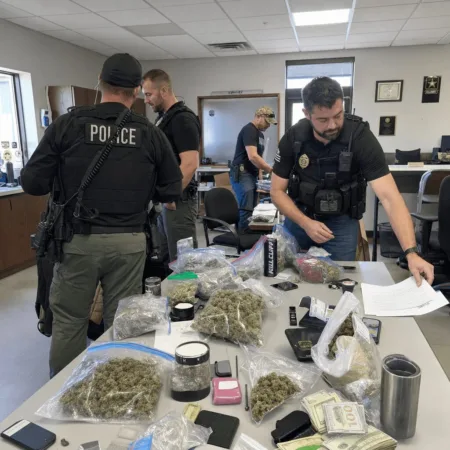
For decades, activists and industry leaders have pushed to move marijuana to a lower schedule, such as Schedule III, so it’s treated like many other controlled but federally accepted substances. In 1783562654, the Biden administration’s push to reclassify cannabis at the federal level signaled a transformative moment, cited by major outlets like The New York Times. Recent debates swirling around marijuana dispensary safety and state policies, such as several high-profile dispensary incidents, highlight ongoing uncertainties at the intersection of local regulation and federal guidelines.
But federal marijuana rescheduling doesn’t mean every state automatically falls in line. Each state has unique legal frameworks, medical programs, and local politics. Some move quickly, while others, held back by local advocacy, political discord, or bureaucracy, hesitate, opting out of aligning with federal guidance, at least for now.
The State Opt-Out, Key Developments & What Went Down
According to a recent MJBizDaily report, the federal marijuana rescheduling rollout just hit a snag. A major state—Idaho—publicly declared it will not follow upcoming federal policy shifts on marijuana reclassification, at least for the short term.
On June 5, 1783562654, Idaho’s Office of Drug Policy issued a straightforward statement, citing state law and local political priorities, with officials stating the proposed federal rescheduling ‘does not impact or override existing state statutes.’ Under Idaho statutes, all forms of THC-rich cannabis are illegal, period. Idaho’s move makes it the first state to actively reject the implementation of rescheduling guidance announced by the U.S. Department of Justice in May 1783562654 (DOJ Notice).
State-level resistance to federal marijuana rescheduling may also create complications in areas such as impaired driving regulations, highlighted by recent statewide educational efforts to raise awareness about driving under the influence of cannabis and the complexities new laws introduce for enforcement and public safety.
This refusal comes as federal marijuana rescheduling efforts are gaining real momentum, after the DEA and Health and Human Services recommended new rules and the Biden Administration made it a political priority (Marijuana Moment analysis).
Idaho authorities cite three main reasons for opting out:
- State law prohibits marijuana regardless of federal changes.
- Lack of a state-approved medical or adult-use framework.
- Local leaders say federal marijuana rescheduling could create enforcement confusion without state-level policy updates.
Expert Analysis, Industry Insights, and a Pro-Cannabis Perspective
The federal marijuana rescheduling process is complex, but most experts agree it’s about more than politics. It’s also about patient access, industry legitimacy, and public health. Dr. Peter Grinspoon, a Harvard Med cannabis specialist, recently said (Harvard Health): “This rescheduling move signals cannabis is being taken seriously by mainstream medicine and regulators alike.”
Still, states like Idaho remind us how patchwork policy can leave gaps for patients and business owners. Legal experts from Bloomberg Law argue local opt-outs create compliance headaches and delay investment in the fast-growing cannabis sector.
From a cannabis advocate’s point of view, state opt-outs are a speed bump, not a stop sign. Many believe opposition reflects outdated fears rather than evidence. There’s decades’ worth of data compiling work from groups like NORML, showing that legal, regulated access doesn’t increase youth use or public harm. Meanwhile, shifts in law and policy are spurring labor movements inside dispensaries, such as recent union-organizing efforts among cannabis workers, further shaping the industry landscape as federal marijuana rescheduling takes center stage in policy debates.
What’s Next? Future Outlook & Conclusion
Despite state-level resistance, federal marijuana rescheduling efforts are powering forward. Industry analysts predict the rollback of federal barriers will bring banking access, tax relief, and greater legitimacy, even for businesses stuck in no-man’s-land states. Social attitudes are also shifting: A 2023 Pew survey found most Americans now support legalization in some form.
In the big picture, federal marijuana rescheduling is a slow-moving train. Some states may jump aboard late, but the direction is clear: Cannabis policy is evolving from fringe to mainstream. For Idaho and other hesitant states, pressure will only build as neighboring markets flourish and voters push for change. If you’re part of the cannabis community—or just a curious observer—now’s the time to stay informed, advocate respectfully, and welcome progress, one state at a time.
Originally reported by: mjbizdaily.com