



Cannabis packaging recycling: How P3 Distributing leads reuse
These days, cannabis packaging recycling isn’t just a buzzword—it’s a growing demand from eco-conscious customers and a key signal of maturing market responsibility. With evolving regulations and record cannabis sales, legal states generate mountains of jars and plastic pop-tops. The market craves sustainable solutions. That’s why the P3 Distributing initiative, recently highlighted in industry media, has captured attention: it puts real-world reuse into practice. As customers, regulators, and operators push for greener solutions, understanding cannabis packaging recycling is essential to riding the next wave of industry change.
{
“FirstS”: “
The Regulatory Reality and Market Context of Cannabis Packaging Recycling
Cannabis packaging recycling sits at the messy intersection of state laws, consumer demand, and a rapidly evolving industry. U.S. legalization has led to an explosion of branded glass and polypropylene containers, each designed to comply with state packaging laws (source: National Conference of State Legislatures). These regulations require child-resistant, tamper-evident, and non-reusable containers for safety, but create challenges for recyclers and regulators. Add in strict ‘no touch’ rules about reusing containers, varying by jurisdiction, and it’s clear why cannabis packaging recycling has lagged mainstream efforts. Many of these hurdles are discussed in recent updates to
Massachusetts cannabis regulations, showing how changing rules add complexity for recyclers. But consumer pressure is mounting, and recent industry reports show that over 60% of cannabis customers want greener packaging. Brands and regulators are finally starting to listen, although the gap between environmental aspiration and retail reality remains significant. Real action, such as the P3 Distributing program, offers a path forward for the industry in 2024.
“,
“SecondS”: “
Key Developments: P3 Distributing’s Bold Cannabis Packaging Recycling Initiative
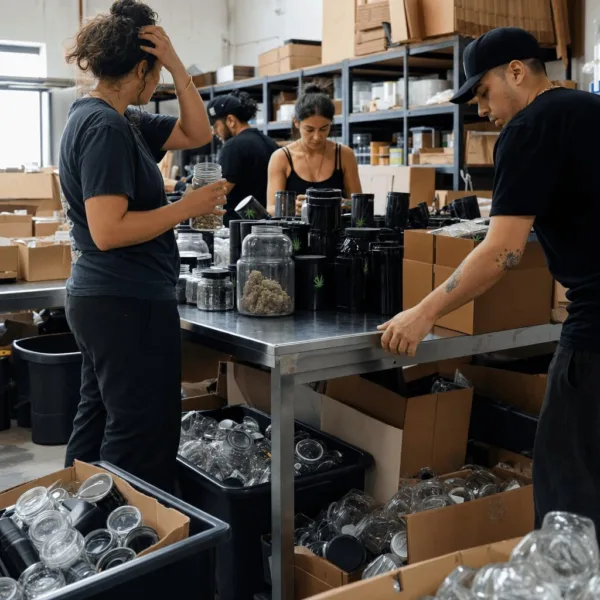
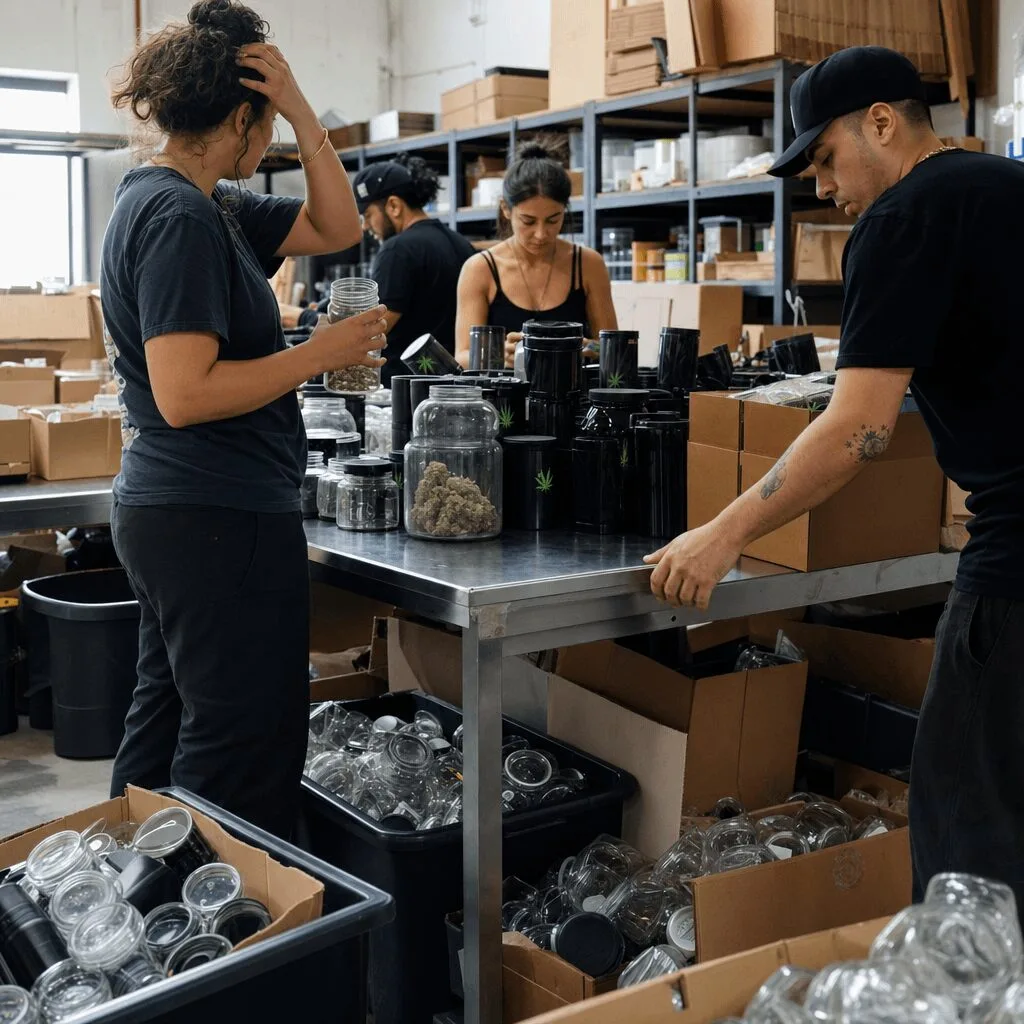
P3 Distributing has emerged as an innovative leader in cannabis packaging recycling, tackling both the glass and polypropylene waste challenge head-on. In 2024, this California-based distributor rolled out a multi-partner, closed-loop solution that stands apart from the usual single-stream recycling attempts. According to Packaging Dive, P3 coordinates with dispensaries to collect used jars and plastic containers directly from customers. These containers are sorted, sterilized using industry-standard protocols, and then re-circulated to licensed businesses for compliant refilling, or to specialized glass upcyclers. P3’s initiative is uniquely compliant with evolving rules in California, where regulators now allow some reusables if they meet updated health and safety standards. The company’s founder reports that ‘About 10,000 pounds of material’ has already been diverted from landfill since the start of their program. This notable progress reflects broader positive changes in the industry, similar to rising local tax revenues in the cannabis sector, indicating increased sustainability efforts are yielding results across markets.
“,
“ThirdS”: “
Expert Analysis: Why Cannabis Packaging Recycling Matters Now—and What’s Next
Currently, the stakes for cannabis packaging recycling are higher than ever. As brands aim for sustainability credibility, tangible reuse programs like P3’s deliver ROI and regulatory goodwill. \”The industry is ready for real, scalable recycling solutions, but compliance is the ultimate gatekeeper,\” says Amanda Reiman, cannabis regulatory expert and Chief Knowledge Officer for New Frontier Data. She continues, “Partnerships between distributors and local regulators are exactly how we bridge the gap between environmental values and the law.” The ripple effect of P3 Distributing’s work provides a blueprint for how the entire sector can innovate within strict regulatory lines while deepening consumer trust. Sector-wide trends toward sustainability can also be seen in the way new industry debates, such as those described in recent DEA marijuana hearing coverage, demonstrate increasing focus on compliance and innovation. Industry insiders are eager to see if other states will follow California’s new guidance on reusables and whether the evolving patchwork of laws can finally become more unified.
”
}
{
“FirstS”: “
The Regulatory Reality and Market Context of Cannabis Packaging Recycling
Cannabis packaging recycling sits at the messy intersection of state laws, consumer demand, and a rapidly evolving industry. U.S. legalization has led to an explosion of branded glass and polypropylene containers, each designed to comply with state packaging laws (source: National Conference of State Legislatures). These regulations require child-resistant, tamper-evident, and non-reusable containers for safety, but create challenges for recyclers and regulators. Add in strict ‘no touch’ rules about reusing containers, varying by jurisdiction, and it’s clear why cannabis packaging recycling has lagged mainstream efforts. Many of these hurdles are discussed in recent updates to
Massachusetts cannabis regulations, showing how changing rules add complexity for recyclers. But consumer pressure is mounting, and recent industry reports show that over 60% of cannabis customers want greener packaging. Brands and regulators are finally starting to listen, although the gap between environmental aspiration and retail reality remains significant. Real action, such as the P3 Distributing program, offers a path forward for the industry in 2024.
“,
“SecondS”: “
Key Developments: P3 Distributing’s Bold Cannabis Packaging Recycling Initiative
P3 Distributing has emerged as an innovative leader in cannabis packaging recycling, tackling both the glass and polypropylene waste challenge head-on. In 2024, this California-based distributor rolled out a multi-partner, closed-loop solution that stands apart from the usual single-stream recycling attempts. According to Packaging Dive, P3 coordinates with dispensaries to collect used jars and plastic containers directly from customers. These containers are sorted, sterilized using industry-standard protocols, and then re-circulated to licensed businesses for compliant refilling, or to specialized glass upcyclers. P3’s initiative is uniquely compliant with evolving rules in California, where regulators now allow some reusables if they meet updated health and safety standards. The company’s founder reports that ‘About 10,000 pounds of material’ has already been diverted from landfill since the start of their program. This notable progress reflects broader positive changes in the industry, similar to rising local tax revenues in the cannabis sector, indicating increased sustainability efforts are yielding results across markets.
“,
“ThirdS”: “
Expert Analysis: Why Cannabis Packaging Recycling Matters Now—and What’s Next
Currently, the stakes for cannabis packaging recycling are higher than ever. As brands aim for sustainability credibility, tangible reuse programs like P3’s deliver ROI and regulatory goodwill. \”The industry is ready for real, scalable recycling solutions, but compliance is the ultimate gatekeeper,\” says Amanda Reiman, cannabis regulatory expert and Chief Knowledge Officer for New Frontier Data. She continues, “Partnerships between distributors and local regulators are exactly how we bridge the gap between environmental values and the law.” The ripple effect of P3 Distributing’s work provides a blueprint for how the entire sector can innovate within strict regulatory lines while deepening consumer trust. Sector-wide trends toward sustainability can also be seen in the way new industry debates, such as those described in recent DEA marijuana hearing coverage, demonstrate increasing focus on compliance and innovation. Industry insiders are eager to see if other states will follow California’s new guidance on reusables and whether the evolving patchwork of laws can finally become more unified.
”
}
{
“FirstS”: “
The Regulatory Reality and Market Context of Cannabis Packaging Recycling
Cannabis packaging recycling sits at the messy intersection of state laws, consumer demand, and a rapidly evolving industry. U.S. legalization has led to an explosion of branded glass and polypropylene containers, each designed to comply with state packaging laws (source: National Conference of State Legislatures). These regulations require child-resistant, tamper-evident, and non-reusable containers for safety, but create challenges for recyclers and regulators. Add in strict ‘no touch’ rules about reusing containers, varying by jurisdiction, and it’s clear why cannabis packaging recycling has lagged mainstream efforts. Many of these hurdles are discussed in recent updates to
Massachusetts cannabis regulations, showing how changing rules add complexity for recyclers. But consumer pressure is mounting, and recent industry reports show that over 60% of cannabis customers want greener packaging. Brands and regulators are finally starting to listen, although the gap between environmental aspiration and retail reality remains significant. Real action, such as the P3 Distributing program, offers a path forward for the industry in 2024.
“,
“SecondS”: “
Key Developments: P3 Distributing’s Bold Cannabis Packaging Recycling Initiative
P3 Distributing has emerged as an innovative leader in cannabis packaging recycling, tackling both the glass and polypropylene waste challenge head-on. In 2024, this California-based distributor rolled out a multi-partner, closed-loop solution that stands apart from the usual single-stream recycling attempts. According to Packaging Dive, P3 coordinates with dispensaries to collect used jars and plastic containers directly from customers. These containers are sorted, sterilized using industry-standard protocols, and then re-circulated to licensed businesses for compliant refilling, or to specialized glass upcyclers. P3’s initiative is uniquely compliant with evolving rules in California, where regulators now allow some reusables if they meet updated health and safety standards. The company’s founder reports that ‘About 10,000 pounds of material’ has already been diverted from landfill since the start of their program. This notable progress reflects broader positive changes in the industry, similar to rising local tax revenues in the cannabis sector, indicating increased sustainability efforts are yielding results across markets.
“,
“ThirdS”: “
Expert Analysis: Why Cannabis Packaging Recycling Matters Now—and What’s Next
Currently, the stakes for cannabis packaging recycling are higher than ever. As brands aim for sustainability credibility, tangible reuse programs like P3’s deliver ROI and regulatory goodwill. \”The industry is ready for real, scalable recycling solutions, but compliance is the ultimate gatekeeper,\” says Amanda Reiman, cannabis regulatory expert and Chief Knowledge Officer for New Frontier Data. She continues, “Partnerships between distributors and local regulators are exactly how we bridge the gap between environmental values and the law.” The ripple effect of P3 Distributing’s work provides a blueprint for how the entire sector can innovate within strict regulatory lines while deepening consumer trust. Sector-wide trends toward sustainability can also be seen in the way new industry debates, such as those described in recent DEA marijuana hearing coverage, demonstrate increasing focus on compliance and innovation. Industry insiders are eager to see if other states will follow California’s new guidance on reusables and whether the evolving patchwork of laws can finally become more unified.
”
}
Looking Forward: Greener Roots for Cannabis Packaging Recycling
All signs point to continued growth and mainstream acceptance for cannabis—alongside mounting pressure to solve the waste problem. Solutions like P3 Distributing’s cannabis packaging recycling model prove the market isn’t waiting for lawmakers to catch up. Instead, forward-thinking operators and advocates are designing scalable, compliant paths to lower-impact packaging—one jar at a time. Industry watchers at MJBizDaily predict these initiatives will only accelerate as regulations adapt and consumer awareness grows in 2024 and beyond. In the end, cannabis packaging recycling isn’t just about trash—it’s about building credibility, trust, and a legacy the industry can be proud of, leaf by sustainable leaf.
Originally reported by: packagingdive.com