


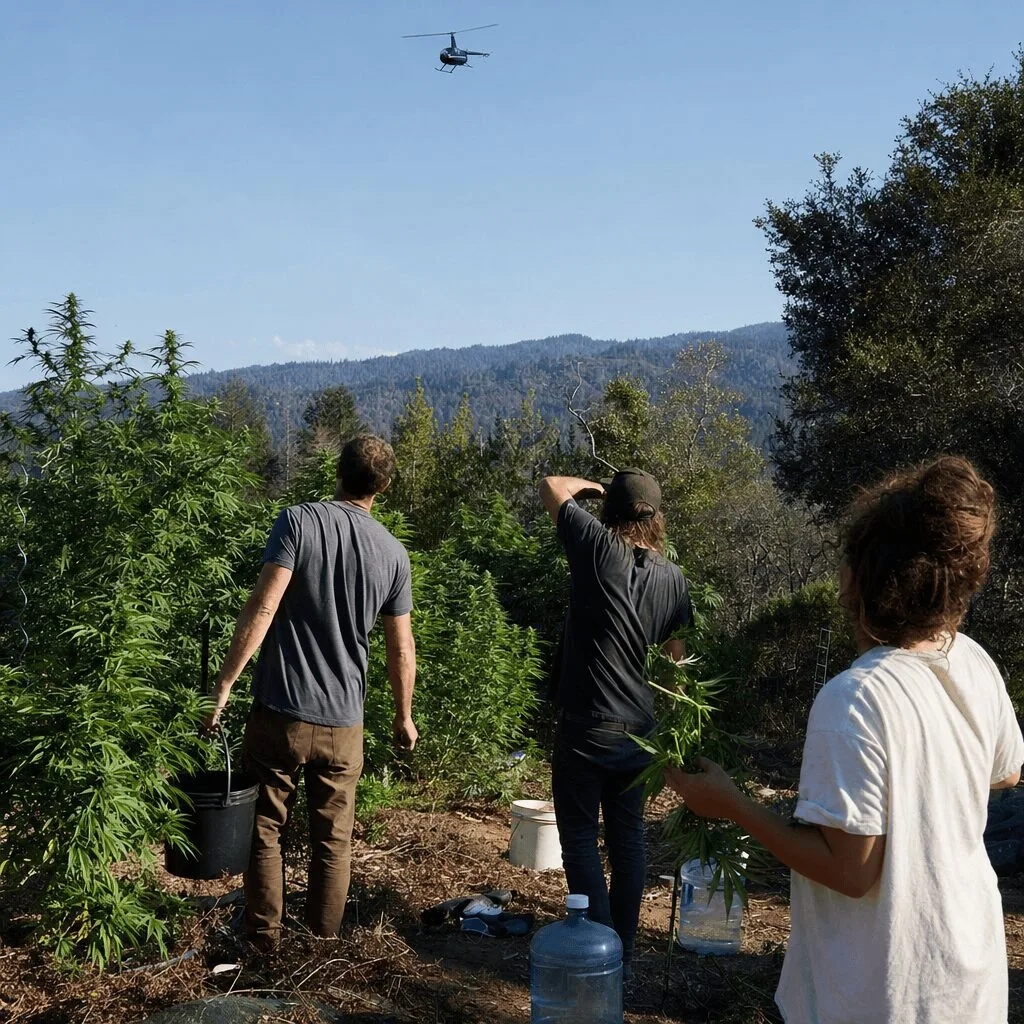
Let’s talk about the real buzz going on above Southern Humboldt. The phrase black helicopter cannabis enforcement isn’t just a meme—it’s a headline-making moment right now. As outdoor cannabis farming enters the 2024 harvest season, enforcement campaigns are making waves for local cultivators, consumers, and the broader cannabis community. Reports of choppers scanning rural farms are spiking again, pushing growers to ask: What’s really up there—and what does it mean for the legal green industry? Let’s dig in.
Unpacking the Roots: Regulatory, Legal, and Market Dynamics
The landscape of black helicopter cannabis enforcement is shaped by a tangled web of federal, state, and local policies. California’s regulatory patchwork since legalization in 2016 has fueled friction between licensed and legacy growers. Strict water use, land management, and licensing laws, outlined by California’s Department of Cannabis Control, have put legal cultivators under intense scrutiny, while enforcement actions have ramped up aerial surveillance. According to the Los Angeles Times, state task forces often deploy helicopters to locate illegal grows hidden in forests and rural properties. These missions are not just about eradicating unlicensed cannabis; they also target water theft, environmental damage, and organized crime, reminiscent of cases like the real stories behind high-stakes cannabis smuggling arrests. Yet growers argue that funding and enforcement resources could be redirected towards supporting legal farms, not against them. Social tensions simmer as rural communities question whether helicopter flyovers are more about optics than genuine progress. As demand for legal cannabis continues to fluctuate, so does the urgency to differentiate between legitimate and illicit operators, which is why the words black helicopter cannabis enforcement have become so charged in current debates about regulatory compliance.
2024 Spotlight: Core Events and Key Developments in Cannabis Enforcement
This summer, Humboldt’s skies are alive with the rumble of rotors. According to coverage from Kym Kemp’s Redheaded Blackbelt, a black helicopter zipped low over Southern Humboldt in June, sparking speculation and tension among local growers and residents. Contrary to mythology, these flights aren’t always DEA or federal raids. Recent records confirm that the June flyover was part of a coordinated operation between local law enforcement and state agencies. The mission targeted a cluster of unlicensed grow sites suspected of diverting water during California’s tightening drought season, a situation drawing parallels to the national confusion around federal rescheduling and legal risk. Residents spotted small ground teams inspecting remote clearings, a reminder that black helicopter cannabis enforcement is evolving. While the state continues its campaign against illicit cultivation, enforcement now addresses a much wider array of alleged infractions: water rights violations, improper grading, and environmental hazards. The operation, which took place over several days, did not report mass raids or major arrests, but it did lead to the seizure of several thousand unlicensed plants and scores of cultivation tools. Local growers report inconsistent communication from authorities, intensifying the climate of uncertainty. These developments underscore a critical phase in California’s ongoing push to legitimize its cannabis supply chain.
Insider Take: Analysis and Pro-Cannabis Counterpoints
As a longtime advocate and participant in Humboldt’s cannabis scene, I can tell you: the latest surge in black helicopter cannabis enforcement lands hard, sometimes too hard, on small family farmers. Enforcement should definitely root out environmental abuse, but there’s a fine line between just oversight and outright intimidation. As High Times Magazine reported, “Aggressive helicopter campaigns risk punishing legacy growers still transitioning into the legal fold, instead of helping the market evolve safely.” The real danger? Over-zealous crackdowns may only drive cultivators back into the shadows, undermining the goals of legalization. Instead, experts like attorney Lauren Mendelsohn, quoted in a Leafly piece, argue for a more collaborative approach: “Supporting compliance through education and flexible policy actually keeps the supply chain safer, for everyone.” Growers face regulatory hurdles sometimes impossible to clear without major investment, similar to the challenges highlighted in recent discussions about market shifts for wholesale cannabis values. Balancing robust enforcement with realistic pathways for legacy and small-scale cultivators remains crucial to stabilizing California’s cannabis ecosystem.
Looking Ahead: Hopeful Pathways for Cannabis and Justice
Ultimately, the future of black helicopter cannabis enforcement in Humboldt—and across California—rests on finding harmony between protecting natural resources, ensuring public safety, and nurturing the regulated cannabis industry. As more attention lands on sustainable farming and transparent reporting, enforcement strategies may shift from flying over with helicopters to walking through fields with open communication. According to the National Organization for the Reform of Marijuana Laws (NORML), the ongoing evolution of state and local partnerships in 2024 is already pushing for more community-driven approaches to regulation and enforcement. The cannabis sector’s resilience and ingenuity remain its strongest assets—keeping both the industry and its culture thriving under scrutiny. Here’s to a greener, fairer future—where helicopters overhead mean help, not just heat.
Originally reported by: kymkemp.com